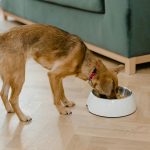

My neighbor called me one afternoon in a mild panic. Her four-year-old Border Collie had been drinking from his water bowl almost constantly for two days. She had refilled the bowl three times in one day — something she had never needed to do before. He was also urinating far more frequently than usual.
She asked me if dogs sometimes just go through phases of drinking more water.
I told her honestly — sometimes yes, but not like that. Not three bowls in a day. I encouraged her to call the vet.
The diagnosis was diabetes. Caught early because she paid attention to her dog’s water intake.
Water consumption is one of the most informative health indicators a dog owner can monitor — and one of the most overlooked. This guide covers how much water a healthy dog should drink, what factors influence that amount, how to recognize dehydration, and when changes in drinking behavior signal something that needs veterinary attention.
Why Water Is the Most Important Nutrient
Water is the most essential nutrient in any animal’s body — more critical in the short term than protein, fat, carbohydrates, vitamins, or minerals.
In dogs, water makes up approximately sixty percent of body weight in adults and up to eighty percent in puppies. It performs essential functions throughout every system of the body.
Digestion — water is required for the production of saliva and digestive enzymes, and for the transport of nutrients across the intestinal wall into the bloodstream.
Circulation — blood is approximately ninety percent water. Water is essential for transporting oxygen, nutrients, hormones, and waste products throughout the body.
Temperature regulation — dogs regulate body temperature primarily through panting. The evaporation of water from the tongue and respiratory tract dissipates heat. This process requires continuous water replacement.
Kidney function — the kidneys filter waste products from the blood and excrete them in urine. Adequate water intake is essential for this process — dehydrated dogs produce concentrated urine that places stress on the kidneys and increases the risk of crystal and stone formation.
Joint lubrication — synovial fluid — the lubricant in joints — is water-based. Adequate hydration maintains joint comfort and mobility.
Waste elimination — water is necessary for the formation of urine and stools. Dehydration contributes to constipation and urinary problems.
A dog that loses just ten percent of their body water becomes seriously ill. A loss of fifteen percent or more can be fatal.
How Much Water Should a Dog Drink Per Day?
The general guideline most commonly cited by veterinarians is approximately one ounce — or thirty milliliters — of water per pound of body weight per day.
In metric terms, this translates to approximately fifty to sixty milliliters per kilogram of body weight per day.
Practical Examples by Dog Size
Small dog — 5 kg (11 lbs): approximately 250 to 300 ml per day — roughly one to one and a quarter cups.
Medium dog — 15 kg (33 lbs): approximately 750 to 900 ml per day — roughly three to four cups.
Large dog — 30 kg (66 lbs): approximately 1,500 to 1,800 ml per day — roughly six to eight cups.
Giant dog — 50 kg (110 lbs): approximately 2,500 ml per day — roughly ten cups.
These are guidelines for a healthy adult dog at rest in a moderate temperature environment. Actual requirements vary significantly based on the factors covered in the next section.
Factors That Affect How Much Water a Dog Needs
The guideline above is a starting point — not a fixed rule. Many factors influence actual water requirements significantly.
Diet — Wet Food vs Dry Food
This is the single most influential factor after body size. Dogs fed primarily wet food obtain a substantial portion of their daily water requirement from their food — wet food is approximately seventy to eighty percent water. A dog eating wet food will drink significantly less from their water bowl than a dog eating dry food — and this is completely normal.
Dogs fed exclusively dry food — which contains only around ten percent water — must compensate entirely through drinking. They need to drink significantly more from their bowl to meet their daily requirements.
A dog transitioning from dry to wet food will drink noticeably less water. This can initially concern owners who assume the dog is not drinking enough. The dog is simply obtaining water from their food instead.
Activity Level
Active dogs — those that exercise vigorously, work, or spend significant time outdoors — lose more water through panting and sweating through the paw pads and require proportionally more water to replace it.
A working sheepdog or a dog that runs with their owner for an hour each morning needs substantially more water than a sedentary indoor dog of the same weight.
Weather and Temperature
Hot weather significantly increases water requirements. Dogs pant to regulate body temperature — and panting evaporates substantial amounts of water. A dog that spends time outside on a hot day may need two to three times their usual water intake.
Cold weather generally reduces water requirements slightly, though dogs that exercise vigorously in cold conditions still need adequate water replacement.
Puppies
Puppies have higher water requirements relative to their body size than adult dogs. Their bodies are proportionally higher in water content, and their metabolic rates are higher. A rough guideline for puppies is approximately half a cup of water every two hours during the day.
Monitor puppy water intake carefully — dehydration develops more rapidly in puppies than in adults.
Nursing Mothers
Lactating dogs have dramatically increased water requirements — milk production is water-intensive. A nursing mother may need two to three times her normal water intake. Ensure constant access to fresh water throughout the nursing period.
Health Conditions
Several health conditions dramatically increase water intake, and recognizing this increase is often what leads to diagnosis. We will cover this in detail in the section on increased drinking below.
Medications
Certain medications increase thirst as a side effect — most notably corticosteroids such as prednisolone. A dog that starts a course of steroids and begins drinking more is responding predictably to the medication.
Stress and Anxiety
Stressed or anxious dogs may drink more than usual — similar to how stress affects human behavior. Some dogs also drink more in new environments.
How to Monitor Your Dog’s Water Intake
You do not need to measure precisely every day. But developing a general sense of your dog’s normal intake makes changes much easier to detect.
Use a measured water bowl. Fill the bowl with a known amount of water and note how much is consumed over the day. This is particularly useful when you first bring a new dog home or when you suspect a change.
Observe bowl-emptying frequency. Over time, you develop an intuitive sense of how quickly your dog empties their bowl. A meaningful change — emptying it twice as fast, or barely touching it — is noticeable once you know the baseline.
Note associated behaviors. Does your dog urinate frequently after drinking? Does urination frequency match drinking frequency? Both increasing together are a significant indicator.
Weigh the dog regularly. Water retention or loss affects body weight. A dog losing significant water weight is dehydrated.
Signs of Dehydration in Dogs
Dehydration occurs when water output exceeds water intake. Even mild dehydration — a loss of just two to three percent of body water — impairs physical and cognitive performance. More significant dehydration becomes dangerous quickly.
The Skin Turgor Test
Gently pinch a fold of skin at the back of the neck or between the shoulder blades, lift it slightly, and release. In a well-hydrated dog, the skin snaps back to its normal position immediately. In a dehydrated dog, the skin returns slowly — taking a second or more to flatten — or stays tented momentarily before returning.
This is a reliable and quick field test for dehydration. Practice it on your dog when you know they are well-hydrated, so you know what normal feels like.
Capillary Refill Time
Press your finger firmly against the dog’s gum — the pink tissue inside the lips — for two seconds, then release. The area under your finger will turn pale as you press. In a well-hydrated dog with normal circulation, the color returns to pink within two seconds.
A capillary refill time of more than two seconds indicates dehydration or circulatory problems. This is a quick and useful assessment tool.
Gum Moisture
Healthy, well-hydrated dog gums are moist and slippery to the touch. Dehydrated dogs have dry or tacky gums — they feel sticky rather than slick.
Run a finger along the gum line. If it feels dry or sticky rather than moist and smooth, the dog is dehydrated.
Other Signs of Dehydration
- Sunken eyes — the eyes appear deeper in their sockets than normal
- Lethargy and weakness — dehydration reduces energy and physical capacity
- Loss of appetite — dehydrated dogs often lose interest in food
- Reduced urination — a dehydrated dog produces less urine, and what is produced is dark and concentrated
- Dry nose — though a dry nose alone is not diagnostic, it can accompany dehydration
- Panting without an obvious reason — the body is attempting to cool despite a fluid deficit
Severe Dehydration — Emergency Signs
Seek immediate veterinary care if a dog shows:
- Extreme lethargy or inability to stand
- Sunken, glazed eyes
- Very dry, pale gums with prolonged capillary refill time
- Rapid, shallow breathing
- Collapse
Severe dehydration is a medical emergency that requires intravenous fluid therapy. Home remedies are not adequate.
What to Do If Your Dog Is Dehydrated
For mild dehydration — skin turgor slightly reduced, gums a little tacky, dog still alert and able to drink — offer small, frequent amounts of fresh water. Do not allow the dog to drink a large amount rapidly — this can cause vomiting and worsen the situation. Offer a few sips every few minutes initially.
If the dog is reluctant to drink, try:
- Adding a small amount of low-sodium chicken broth to the water
- Offering water from your cupped hand
- Using a different bowl — some dogs prefer certain materials or depths
If dehydration does not improve within a few hours, or if any more severe signs are present, go to the vet.
Increased Drinking — When to Be Concerned
Increased thirst — called polydipsia — combined with increased urination — called polyuria — is one of the most important health warning signals in dogs. Together, they are referred to as PU/PD and are associated with several serious medical conditions.
As a general guideline, a healthy dog should not drink more than approximately one hundred milliliters per kilogram of body weight per day. Consumption above this threshold on a consistent basis is considered polydipsia and warrants veterinary investigation.
Conditions That Cause Increased Drinking and Urination
Diabetes mellitus — high blood glucose draws water into the urine through osmosis, causing large volumes of urine to be produced. The resulting fluid loss drives intense thirst. A dog with diabetes often drinks three to four times the normal amount and urinates correspondingly frequently. This was the situation with my neighbor’s Border Collie.
Chronic kidney disease — as the kidneys lose their ability to concentrate urine effectively, they produce large volumes of dilute urine. The body compensates by driving increased thirst. Increased thirst and urination in a middle-aged or older dog are always worth investigating with a blood and urine test.
Hyperadrenocorticism — Cushing’s disease — excess cortisol from a pituitary or adrenal tumor causes dramatically increased thirst and urination alongside other characteristic signs — a pot-bellied appearance, hair loss, muscle wasting, and thin skin.
Hyperthyroidism — while more common in cats, hyperthyroidism in dogs causes increased thirst and urination alongside weight loss, increased appetite, and restlessness.
Pyometra — a uterine infection in intact female dogs. Toxins from the infection cause kidney dysfunction that results in dramatically increased thirst and urination. Pyometra is a life-threatening emergency. Increased thirst in an intact female dog — particularly in the weeks following a heat cycle — requires same-day veterinary attention.
Liver disease — hepatic dysfunction affects fluid and electrolyte regulation, causing increased thirst and urination alongside other signs, including lethargy, vomiting, and jaundice.
Hypercalcemia — elevated blood calcium causes increased urination and thirst. It can result from certain cancers, vitamin D toxicity, or primary hyperparathyroidism.
Psychogenic polydipsia — in rare cases, dogs drink excessively without an underlying physical cause — a behavioral or psychological compulsion. This is a diagnosis of exclusion after medical causes have been ruled out.
Medication effects — corticosteroids, diuretics, and certain other medications cause increased thirst as a direct pharmacological effect.
What to Do
If you notice your dog consistently drinking significantly more than their usual amount and urinating more frequently — particularly if this has developed over days or weeks rather than being related to obvious factors like hot weather or increased exercise — schedule a vet visit.
Blood and urine tests — a basic panel — will identify the most common causes of polydipsia within a day of testing.
Do not restrict water in response to excessive drinking. The dog may be drinking excessively because their body genuinely needs the water — restricting intake in this situation can cause serious harm. Allow normal access to water and let the vet investigation identify the cause.
Decreased Drinking — When to Be Concerned
Some dogs drink less than expected — and this can also signal a problem, though it is less commonly discussed.
Possible reasons for reduced drinking:
Wet food diet — as discussed, dogs eating primarily wet food drink noticeably less from their bowl. This is normal and healthy.
Cold weather — slightly reduced intake in cold weather is normal.
Reduced activity — a dog recovering from surgery or on restricted exercise needs less water.
Dental pain — drinking from a bowl requires contact between water and the gums and teeth. A dog with significant dental pain may drink less because it hurts. If a previously normal drinker begins consuming less water alongside other signs of dental discomfort, dental disease is worth investigating.
Nausea — a nauseous dog may avoid drinking as the taste or smell of water triggers nausea. This is particularly common during illness.
Contaminated or changed water — some dogs are sensitive to changes in water quality, taste, or smell. A change in the household water supply — chlorination levels, mineral content — can cause a dog to reduce drinking. Using filtered water sometimes resolves this.
Stress or anxiety — a dog in a new environment or under significant stress may eat and drink less than usual.
A healthy adult dog that is not drinking at all for more than twenty-four hours — particularly alongside other symptoms — needs veterinary attention.
Encouraging Adequate Water Intake
For dogs that do not drink as much as they should — particularly those prone to urinary problems or kidney disease — these strategies help increase daily water intake.
Transition to wet food or add wet food to dry food. This is the most effective single intervention.
Use a cat water fountain. Many dogs are attracted to moving water and drink significantly more when water flows rather than sits stagnant. The same fountains marketed for cats work very well for small and medium dogs.
Provide multiple water stations. Some dogs drink more when water is available in several locations — near the food bowl, in the living room, near the back door. Remove friction from the decision to drink.
Add low-sodium chicken or beef broth to water. A small amount of flavorful broth makes water more appealing to many dogs.
Use wide, shallow bowls. Some dogs — particularly those with whisker sensitivity — prefer wide, shallow bowls that do not press against the face.
Keep water fresh. Change the water at least once daily, wash the bowl regularly, and rinse out any debris. Stale water with food particles or saliva accumulation is unappealing.
Add water directly to food. Mix a tablespoon or two of warm water into dry kibble before serving. This increases moisture intake without requiring the dog to drink separately.
Water Quality and Safety
Most dogs drink tap water without any problems. However, there are situations where water quality deserves consideration.
Hard water — high mineral content water has been associated in some research with increased rates of urinary crystals in predisposed dogs. If your dog has recurrent urinary problems and you live in a hard water area, filtered water is worth trying.
Fluoride — standard tap water fluoride levels are generally considered safe for dogs. Excessive fluoride — from heavily fluoridated water in some regions — has been associated with skeletal changes with long-term exposure, though this is uncommon at typical tap water concentrations.
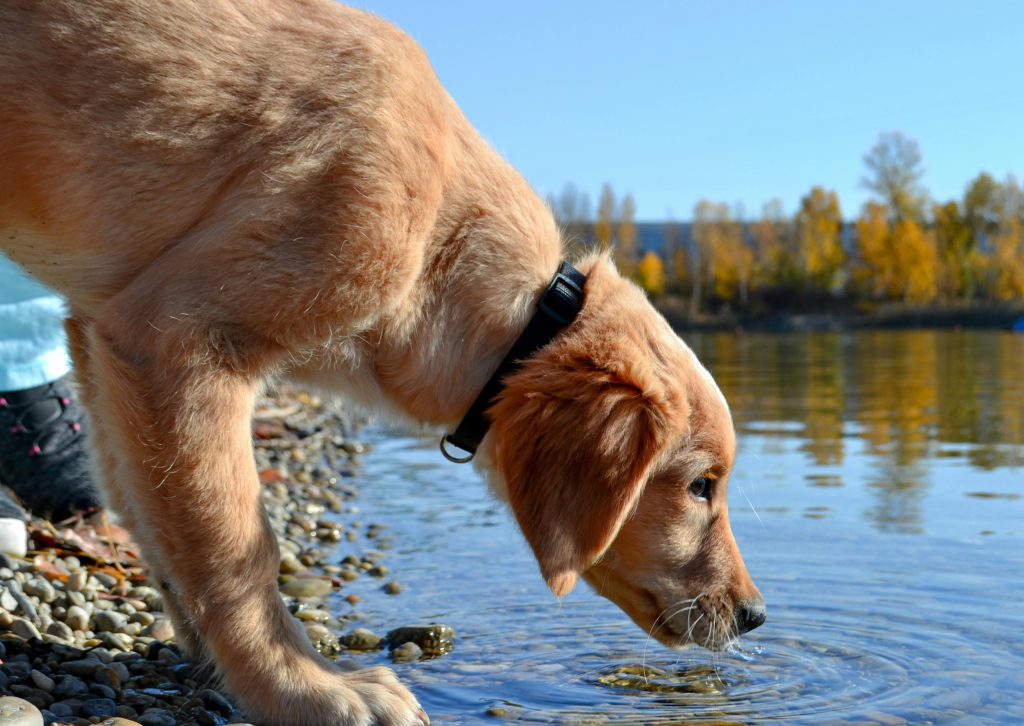
Outdoor water sources — dogs that drink from puddles, ponds, or outdoor water containers are at risk of ingesting bacteria, parasites, algae toxins, and chemical runoff. Discourage drinking from standing outdoor water where possible.
Blue-green algae — certain bodies of water develop blue-green algae blooms — cyanobacteria — particularly in warm weather. Blue-green algae produce potent toxins that can cause rapid liver failure and neurological damage in dogs. Never allow dogs to drink from or swim in water with visible algae blooms.
Final Thoughts
Water is not the most glamorous aspect of dog care. It does not involve premium ingredients or carefully researched formulations. It is simply a bowl of fresh water — available always, changed daily, positioned conveniently.
But the information that water intake provides — and the health consequences of getting it wrong in either direction — makes it one of the most important things to pay attention to.
Know your dog’s normal. Notice when it changes. Act when the change is significant.
My neighbor’s attentiveness to her dog’s water bowl led to an early diabetes diagnosis that significantly improved his treatment outcome. Your attention to the same simple observation could do the same.
⚠️ Disclaimer: This article is for informational purposes only and does not replace professional veterinary advice. Always consult a licensed veterinarian if your dog is drinking significantly more or less than usual.
Sources: American Kennel Club (AKC), VCA Animal Hospitals, Merck Veterinary Manual, American Veterinary Medical Association (AVMA)
- Best Food for Dogs
- Why Is My Dog Not Eating
- Dog Fever
- cat vaccinations
- cat in pain
- happy cat
- Dog Skin Problems

Stay Updated with Pet Health Tips
Get simple, expert-backed tips, disease alerts, and care guides for your pets—delivered straight to your inbox.