
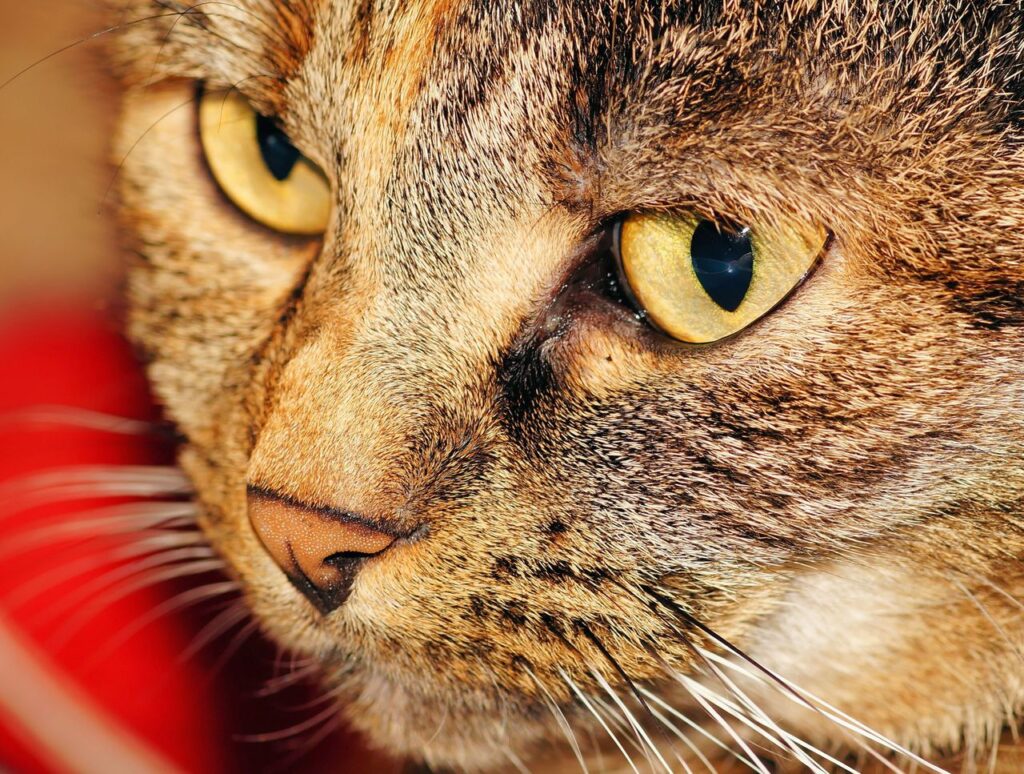
I noticed it on a Tuesday morning. Mango’s left eye had a small amount of crusty discharge in the corner — nothing dramatic, just enough that I wiped it away with a damp cloth before breakfast. cat eye discharge
By Thursday, it was back. Furthermore, it was thicker, slightly yellow, and her eye looked a little redder than usual.
Therefore, I called the vet. The diagnosis was conjunctivitis — a mild bacterial infection that cleared up within a week with the right eye drops.
However, that experience taught me something important. Cat eye discharge is extremely common, and it ranges from completely harmless to a sign of something that needs prompt treatment. Therefore, knowing the difference matters.
This guide covers everything about cat eye discharge — what causes it, what the color and consistency tell you, and exactly when to see a vet.
What Causes Cat Eye Discharge?
Yes — a small amount of clear or slightly tinted discharge in the corner of a cat’s eye, particularly first thing in the morning, is often completely normal. Furthermore, this is simply the eye’s natural cleaning process at work, removing dust and debris that accumulated overnight.
However, cat eye discharge becomes a concern when it is:
Persistent — present throughout the day, not just in the morning.
Colored — yellow, green, or bloody rather than clear.
Thick — pasty or crusty rather than watery.
One-sided — affecting only one eye when both should normally look the same.
Accompanied by other symptoms — redness, swelling, squinting, or the cat pawing at the eye.
Therefore, if your cat’s eye discharge matches any of these descriptions, it is worth investigating further.
What Causes Cat Eye Discharge?
Cat eye discharge has many possible causes. Furthermore, the color, consistency, and whether one or both eyes are affected provide important clues about which cause applies.
1. Conjunctivitis
Conjunctivitis — inflammation of the membrane covering the eye and inner eyelids — is the most common cause of cat eye discharge. Therefore, it deserves the most attention in this guide.
Conjunctivitis in cats has several possible underlying causes:
Feline herpesvirus — the most common cause of conjunctivitis in cats. This virus causes recurring flare-ups throughout a cat’s life, often triggered by stress. Furthermore, herpesvirus conjunctivitis frequently affects both eyes and is often accompanied by sneezing and nasal discharge.
Chlamydia felis — a bacterial cause of conjunctivitis, particularly common in young cats and multi-cat households. This typically causes significant discharge and redness.
Calicivirus — another viral cause, often accompanied by mouth ulcers and respiratory symptoms.
Bacterial infection — secondary bacterial infections often develop on top of viral conjunctivitis, turning clear discharge thick and yellow or green.
Allergies — environmental allergens can cause conjunctivitis with clear, watery discharge, often affecting both eyes equally.
Irritants — dust, smoke, or chemical fumes can cause temporary conjunctivitis that resolves once the irritant is removed.
The hallmark signs of conjunctivitis include redness of the white part of the eye and inner eyelids, discharge ranging from clear and watery to thick and colored, squinting, and excessive blinking.
2. Blocked Tear Ducts
Tears normally drain through small ducts into the nose. Therefore, when these ducts become blocked — due to inflammation, infection, or anatomical narrowing — tears overflow onto the face instead.
This condition, called epiphora, causes persistent wet staining below the eye, particularly visible in light-colored cats, where it produces a reddish-brown tear stain. Furthermore, certain flat-faced breeds — Persians, Himalayans — are particularly prone to this due to their facial structure.
Blocked tear ducts themselves are not usually painful, but the constant moisture can lead to skin irritation and secondary infection in the affected area.
3. Corneal Ulcer
A corneal ulcer is a break in the surface of the cornea — the clear front layer of the eye. Therefore, this is a painful condition that produces significant discharge alongside other dramatic symptoms.
Corneal ulcers can result from trauma — a scratch from another cat, a foreign object, or rubbing against something sharp — or from herpesvirus infection, which can cause characteristic branching ulcers on the cornea.
Signs of a corneal ulcer include significant squinting, excessive tearing or discharge, visible cloudiness or a defect on the eye surface, and the cat keeping the eye closed much of the time. Furthermore, corneal ulcers are genuinely painful and require prompt veterinary treatment — untreated ulcers can deepen and potentially cause permanent damage to vision.
4. Foreign Body
A foreign object — a grass seed, a piece of debris, or an eyelash growing in an abnormal direction — trapped under the eyelid causes significant irritation and discharge.
Therefore, a cat with a foreign body in the eye typically shows a sudden onset of squinting, excessive tearing, and pawing at the affected eye. Furthermore, this is usually one-sided, affecting only the eye with the foreign object.
A vet can examine under the eyelids and remove foreign material — this often provides immediate relief.
5. Entropion
Entropion is a condition where the eyelid rolls inward, causing the eyelashes and fur to rub against the surface of the eye. Therefore, this constant irritation causes chronic discharge, redness, and discomfort.
This condition can be present from birth in certain breeds or develop secondary to chronic eye inflammation. Furthermore, surgical correction is often needed to resolve entropion permanently.
6. Uveitis
Uveitis is inflammation of the inner structures of the eye — the iris and surrounding tissue. Therefore, this is a more serious condition than conjunctivitis, as it affects deeper eye structures rather than just the surface membrane.
Uveitis can be caused by infections, immune-mediated disease, trauma, or as a sign of systemic illness — including feline leukemia virus, feline immunodeficiency virus, and certain fungal infections.
Signs include discharge alongside a change in the appearance of the iris, an unusually small or irregular pupil, cloudiness within the eye itself, and pain. Furthermore, uveitis requires prompt veterinary investigation because it can be a marker of significant underlying disease.
7. Glaucoma
Glaucoma — increased pressure within the eye — is a serious and painful condition that can cause discharge alongside more dramatic symptoms. Therefore, this is an emergency requiring same-day veterinary attention.
Signs of glaucoma include an eye that appears larger than normal, cloudiness of the cornea, a dilated pupil that does not respond to light, redness, and significant pain — the cat may rub the eye, keep it closed, or become unusually withdrawn.
Without prompt treatment, glaucoma causes permanent vision loss within hours to days. Therefore, any sudden change in eye size or appearance, along with discharge, warrants emergency care.
8. Dry Eye — Keratoconjunctivitis Sicca
Dry eye occurs when the eye does not produce enough tear film to keep the surface adequately lubricated. Therefore, paradoxically, this can cause thick, sticky discharge as the eye attempts to compensate for inadequate lubrication.
This condition is less common in cats than in dogs, but it does occur, often as a consequence of chronic herpesvirus infection that has damaged the tear-producing glands.
What the Cat Eye Discharge Color Tells You
The appearance of cat eye discharge provides important diagnostic information.
Clear and watery — often normal, allergies, mild irritation, or early viral conjunctivitis.
White or grey, mucousy — suggests mild to moderate inflammation, often viral in origin.
Yellow or green — indicates bacterial infection, either primary or secondary to a viral infection. Therefore, this typically requires antibiotic treatment.
Bloody or pink-tinged — suggests trauma, a corneal ulcer, or significant inflammation. This always warrants veterinary examination.
Brown staining below the eye indicates chronic tear overflow, often from blocked tear ducts. Not typically an emergency, but worth mentioning to your vet.
One Eye vs Both Eyes
Whether one or both eyes are affected provides an important clue.
Both eyes affected — suggests a systemic cause: viral infection (herpesvirus, calicivirus), allergies, or environmental irritants. Furthermore, this pattern is common with feline upper respiratory infections.
One eye affected — suggests a localized cause: foreign body, corneal ulcer, trauma, or entropion specific to that eye. Therefore, a sudden onset affecting only one eye often points toward a physical cause rather than infection.
Other Symptoms to Watch For
Discharge alone provides part of the picture. Therefore, pay attention to what else is happening.
Squinting or keeping the eye closed — suggests pain, often from a corneal ulcer, foreign body, or significant inflammation.
Redness of the white part of the eye indicates inflammation, whether from conjunctivitis, uveitis, or other causes.
Cloudiness of the eye surface may indicate a corneal ulcer, uveitis, or glaucoma. Furthermore, this always warrants prompt veterinary attention.
Change in pupil size or shape — can indicate uveitis or glaucoma, both serious conditions.
Pawing at the eye suggests significant discomfort or a foreign body.
Sneezing and nasal discharge — suggest a viral upper respiratory infection causing the eye discharge.
Visible swelling around the eye may indicate infection, abscess, or significant inflammation.
When to See a Vet
Monitor at home for a day or two if:
- Discharge is mild, clear, and the cat seems otherwise completely normal
- Only a small amount of crusting appears, primarily in the morning
- The cat is eating, behaving, and grooming normally
See a vet within a few days if:
- Discharge persists for more than two to three days
- Discharge becomes thick, yellow, or green
- One eye looks different from the other — redder, more discharge, or different pupil size
See a vet the same day if:
- The cat is squinting or keeping its eye closed
- Discharge is bloody
- The eye appears cloudy
- The cat is pawing persistently at the eye
- Discharge is accompanied by sneezing, lethargy, or reduced appetite
Seek emergency care immediately if:
- The eye appears suddenly larger than normal
- The pupil is dilated and does not respond to light
- There is visible trauma to the eye
- The cat shows sudden, severe pain
How Vets Diagnose the Cause
For straightforward conjunctivitis, a vet can often make a diagnosis based on examination alone. Therefore, additional testing is reserved for cases that are severe, recurrent, or not responding to initial treatment.
Fluorescein staining — a special dye applied to the eye that highlights corneal ulcers under blue light. This is a quick, painless test that identifies ulcers invisible to the naked eye.
Tear production test — measures whether the eye produces adequate tear film, used to diagnose dry eye.
Eye pressure measurement — a quick test that measures the pressure inside the eye, essential for diagnosing or ruling out glaucoma.
Examination under the eyelids — checking for foreign bodies or abnormal eyelash growth.
Swabs for PCR testing — to identify specific viral or bacterial causes in recurrent or severe cases.
Blood tests — for cats with uveitis, to investigate underlying systemic disease such as FeLV or FIV.
Treatment Options
Treatment depends entirely on the underlying cause. Therefore, accurate diagnosis matters — using the wrong eye medication can worsen certain conditions, particularly corneal ulcers.
Bacterial conjunctivitis — antibiotic eye drops or ointment, typically applied for one to two weeks.
Viral conjunctivitis — antiviral medication for severe or recurrent herpesvirus flare-ups, alongside supportive care to keep the eye clean.
Corneal ulcers — specific antibiotic drops, and critically, never steroid-containing eye medication, which can worsen ulcers significantly. Severe ulcers may require surgical treatment.
Foreign bodies — removal under sedation or with a topical anesthetic, followed by antibiotic drops to prevent infection.
Blocked tear ducts — flushing of the tear ducts under sedation, though some cases require ongoing management rather than a permanent cure.
Entropion — surgical correction of the eyelid position.
Uveitis — anti-inflammatory medication alongside treatment of any identified underlying cause.
Glaucoma — emergency medication to reduce eye pressure, with surgery sometimes required for long-term management.
How to Clean Discharge at Home
For mild discharge while waiting for or alongside veterinary treatment, gentle cleaning helps keep the cat comfortable.
Use a clean, soft cloth or cotton ball dampened with lukewarm water — or saline solution if recommended by your vet. Therefore, wipe gently from the inner corner of the eye outward, using a fresh cloth or cotton ball for each eye to avoid spreading infection between eyes.
Never use human eye drops, over-the-counter products, or home remedies without veterinary guidance. Furthermore, never attempt to apply medication containing steroids unless specifically prescribed and confirmed safe for the diagnosed condition — steroids can dramatically worsen corneal ulcers.
Preventing Eye Discharge in Cats
Keep vaccinations current — the FVRCP vaccine reduces the severity of herpesvirus and calicivirus, the most common causes of conjunctivitis.
Reduce stress — herpesvirus flare-ups are often triggered by stress. Therefore, a stable environment and routine help reduce recurrence.
Maintain hygiene in multi-cat households — clean shared spaces regularly to reduce transmission of contagious causes of conjunctivitis.
Schedule regular checkups — particularly for senior cats, where uveitis and other serious eye conditions become more common.
Address tear staining promptly — gentle daily cleaning of tear-stained areas prevents secondary skin infection.
Final Thoughts
Mango’s eye discharge that Tuesday morning turned out to be nothing serious — a week of antibiotic drops, and it was completely resolved. However, the experience taught me to pay attention to the details — the color, whether one or both eyes were affected, and what else was happening alongside it.
Therefore, most cat eye discharge is manageable and not an emergency. However, the signs that warrant urgency — cloudiness, sudden changes in size, severe pain, bloody discharge — are important to recognize because the eye conditions that produce these signs can threaten vision if treatment is delayed.
Watch your cat’s eyes. Notice the small changes. And act when something looks different from normal.
⚠️ Disclaimer: This article is for informational purposes only and does not replace professional veterinary advice. If your cat has eye discharge accompanied by pain, cloudiness, or other concerning symptoms, consult a licensed veterinarian promptly.
Sources: Cornell Feline Health Center, American Association of Feline Practitioners (AAFP), VCA Animal Hospitals, American College of Veterinary Ophthalmologists

Stay Updated with Pet Health Tips
Get simple, expert-backed tips, disease alerts, and care guides for your pets—delivered straight to your inbox.