
When I first got Mango, I spent weeks worrying about whether she was happy. She seemed calm. She ate well. She used the litter box reliably. But she was not the constantly purring, lap-sitting cat I had imagined. She spent a lot of time simply sitting by the window, watching birds. She slept in her bed rather than on me. She played enthusiastically for ten minutes and then ignored me completely for two hours.
Was she happy? Was she just tolerating me? Was something wrong?
It took time — and a lot of learning about cat behavior — to understand that Mango was, in fact, perfectly happy. She was just showing it in the way cats show it. Not in the loud, obvious, tail-wagging way dogs do. In the quiet, understated, deeply feline way that requires knowing what to look for.
This guide will teach you exactly what to look for — the signs that your cat is genuinely happy, content, and thriving.
Why Understanding Cat Happiness Matters
A happy cat is a healthy cat. Chronic stress and unhappiness in cats suppress the immune system, increase the risk of stress-related illnesses like feline idiopathic cystitis, and reduce overall lifespan.
Understanding whether your cat is happy also helps you identify when something has changed. A cat that was showing all the signs of contentment and then gradually stops is communicating that something in their environment, health, or emotional state has shifted — and that deserves attention.
Body Language Signs of a Happy Cat
A Relaxed, Upright Tail
The tail is one of the most expressive parts of a cat’s body. A happy, confident cat carries their tail upright — pointing straight toward the ceiling — often with a slight curve at the very tip like a question mark.
This upright tail position is a greeting signal — cats raise their tails toward other cats and toward humans they feel safe and affectionate with. When your cat walks toward you with their tail held high, they are expressing confidence, affection, and positive anticipation.
A tail held low or tucked between the legs indicates fear or submission. A tail puffed to twice its normal size indicates fear or aggression. A tail lashing rapidly from side to side indicates agitation or overstimulation. The upright, relaxed tail is the one you want to see.
Slow Blinking Eyes
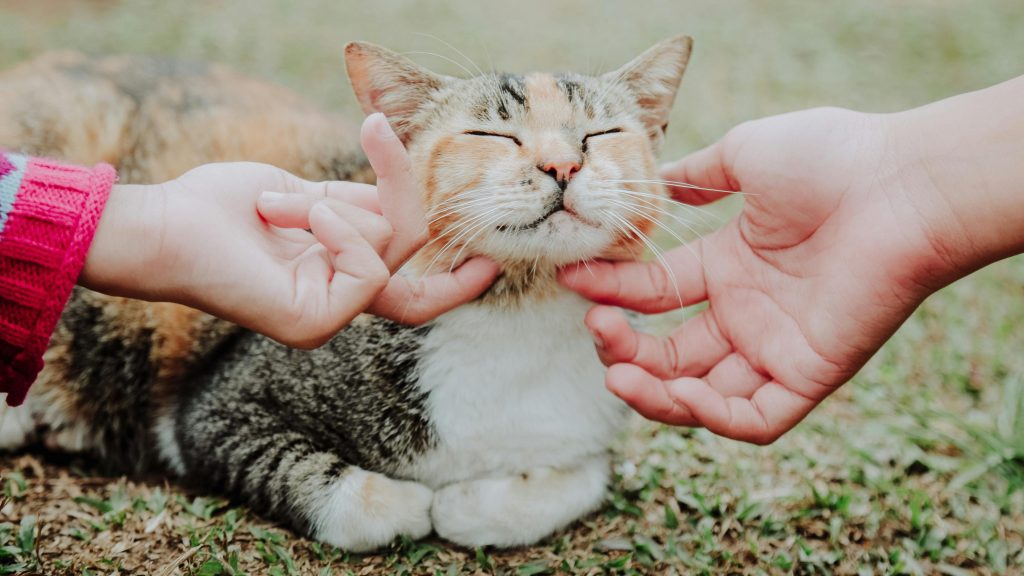
Slow blinking is one of the most significant and recognizable expressions of contentment and trust in cats. When a cat looks at you and blinks slowly and deliberately — holding the eyes closed for a moment before opening them again — they are communicating trust, affection, and comfort.
In cat social language, a direct, unblinking stare is a challenge or a threat. Slow blinking is the opposite — it is a deliberate softening of the gaze that signals peaceful intentions and emotional safety.
When your cat slow-blinks at you, slow-blink back. Hold eye contact softly, blink slowly, and look away slightly. You are engaging in one of the most direct and meaningful forms of communication available between humans and cats.
Relaxed Body Posture
A happy cat at rest has a distinctly relaxed physical appearance. The muscles are soft and loose rather than tense. The body is often in one of the following positions:
The loaf — the cat sits with all four paws tucked neatly under the body, resembling a loaf of bread. This position indicates comfort and relaxation — a cat that feels safe enough to tuck away their paws, reducing their immediate readiness to flee.
Fully stretched out — lying completely flat on one side or on the back with the belly exposed. A cat that exposes their belly is displaying profound trust — the belly is the most vulnerable area of the body, and a cat only exposes it in environments where they feel completely safe.
The Superman — lying flat with the legs stretched out behind, belly on the floor, head resting on the front paws. This is maximum relaxation.
Contrast these relaxed positions with the posture of an unhappy or anxious cat — tense, hunched, with feet positioned for a quick escape, body low to the ground, and head slightly tucked.
Ears in the Forward or Neutral Position
Happy, relaxed cats hold their ears pointing forward or slightly to the side in a neutral, open position. The ears may swivel gently to follow sounds of interest but return to this neutral, forward-facing position.
Ears flattened against the head indicate fear or aggression. Ears rotated backward or sideways indicate discomfort, pain, or anxiety. Forward, open ears indicate a calm, positive emotional state.
Kneading
Kneading — the rhythmic pushing of alternate front paws against a soft surface — is a behavior that originates in kittenhood when kittens stimulate milk flow by kneading the mother’s abdomen. Adult cats carry this behavior into their adult lives and perform it exclusively in situations of deep comfort, safety, and contentment.
A cat that kneads on your lap, on a blanket, or on a favorite sleeping spot is expressing a level of comfort and happiness that connects directly to the deepest feelings of warmth and security from their earliest life.
If kneading is uncomfortable because of the claws, gently place a folded blanket between the cat and your skin. Never punish or discourage kneading — it is a profound expression of trust and affection.
Headbutting and Bunting
When a cat presses their forehead, cheek, or chin against you — a behavior called bunting or headbutting — they are depositing scent from the glands located in these facial areas onto you. This scent marking is a form of social bonding and territorial claiming that cats perform toward other cats they feel affiliated with.
When your cat headbutts you, they are essentially saying — You are part of my group. You belong to me. I feel safe enough with you to mark you with my scent.
It is one of the clearest and most direct expressions of feline affection available.
Behavioral Signs of a Happy Cat
Healthy Appetite and Normal Eating Habits
A happy, healthy cat eats with consistent enthusiasm. They approach their food bowl readily at meal times, eat at a reasonable pace, and finish their food.
Changes in appetite — eating significantly less, showing reduced enthusiasm for previously enjoyed food, or eating significantly more than usual — are worth investigating. A genuinely happy, healthy cat has a stable, healthy appetite.
Regular, Enthusiastic Play
Cats retain their hunting instincts throughout their lives. A happy, healthy cat engages enthusiastically in play — chasing wand toys, stalking crinkle balls, ambushing moving objects, and expressing the full sequence of hunting behavior: stalk, pounce, catch, bite, kick.
Play serves as physical exercise and mental stimulation, and a cat that plays readily and enthusiastically is a cat whose physical and emotional needs are being met.
Reduced interest in play — particularly in a previously playful cat — can indicate illness, pain, depression, or an environment that does not provide adequate stimulation. If your cat has stopped playing, investigate why rather than assuming they have simply matured past it.
Sleeping Comfortably in Exposed Locations
Cats sleep between twelve and sixteen hours per day. Where and how they sleep is a significant indicator of their emotional state.
A happy, secure cat sleeps in relaxed, open positions — often in visible, accessible locations rather than hidden corners. They may sleep on the sofa, on a sunny windowsill, in the middle of the bed, or in any other comfortable location where they feel safe being visible and accessible.
A cat that always hides to sleep — in dark corners, under furniture, in enclosed spaces — may be using the concealment as a coping strategy for chronic anxiety or illness, particularly if this is a change from previous behavior.
Vocalizing Appropriately
Cats vary enormously in how vocal they are — some breeds like Siamese and Burmese are naturally very talkative, while others are quiet by nature. The important indicator is not the volume of vocalization but whether it is appropriate for the individual cat.
A happy cat meows, chirps, trills, and chatters in a conversational, relaxed way. They may vocalize when greeting their owner, when asking for food, when watching birds through the window, or simply when they have something to communicate.
Changes in vocalization — becoming suddenly much more vocal, particularly with a yowling or distressed quality — can indicate pain, disorientation in senior cats, or hyperthyroidism.
Curiosity and Interest in the Environment
A happy cat is curious. They investigate new objects, watch movement and activity in the household, observe birds through windows, explore new additions to the home, and maintain an active interest in what is happening around them.
Curiosity requires a baseline sense of security — a cat that is chronically anxious or unwell does not have the emotional bandwidth for curiosity. A cat that actively engages with their environment is demonstrating that they feel safe and stimulated enough to explore.
Using the Litter Box Consistently
Consistent, reliable litter box use is a sign of a cat that is physically healthy and comfortable in their environment. Changes in litter box behavior — avoiding the box, eliminating outside the box, or showing distress around the litter box — often indicate physical illness or environmental stress.
Grooming Regularly and Thoroughly
A happy, healthy cat grooms themselves thoroughly and regularly. Their coat is clean, smooth, and in good condition. They spend time each day licking their fur into order — and may groom you or other cats they are bonded with.
A cat that stops grooming — producing a dull, matted, or unkempt coat — is signaling that something is wrong. Conversely, a cat that grooms excessively — licking one area obsessively until the fur is gone — is also signaling stress or a physical problem.
Social Signs of a Happy Cat
Seeking Your Company
A happy cat wants to be near the people they are bonded to — but on their own terms. They may not sit on your lap or demand constant contact, but they will position themselves in the same room, follow you between rooms, and choose to rest near you rather than far away.
This proximity without constant contact is a classic expression of feline affection. Your cat wants to be near you — they simply do not need to be touching you every moment to feel that connection.
Greeting You When You Come Home
Many cats greet their owners at the door — approaching with a raised tail, vocalizing, and rubbing against their legs. This greeting behavior is a direct expression of social bond and positive anticipation.
Not all cats greet at the door — some prefer to wait until the owner comes to them. But a cat that is genuinely happy to see you will show it in some way — emerging from wherever they were resting, approaching within a short time, or vocalizing in greeting, even from a distance.
Grooming You
Allogrooming — one cat grooming another — is a bonding behavior between socially affiliated cats. When a cat licks your hand, your hair, or any accessible part of you, they are extending this bonding behavior to you — treating you as a trusted member of their social group.
It is an expression of affection and acceptance that cats reserve for those they feel genuinely close to.
Bringing You Gifts
Some cats bring their owners dead or living prey — birds, mice, insects, or toys. While this behavior is often alarming to the recipient, it is a meaningful expression of social bonding.
Cats that share prey are sharing a resource with a trusted companion. Your cat is not trying to horrify you — they are including you in one of the most fundamental feline social behaviors. It is, in its way, a compliment.
Physical Signs of a Healthy Cat
Bright, Clear Eyes
Happy, healthy cats have bright, clear eyes with pupils that respond normally to light — dilating in dim conditions and contracting in bright light. The whites of the eyes — visible only when the cat is alarmed — should be white and clear.
Discharge, cloudiness, redness, or persistently dilated or constricted pupils warrant veterinary attention.
Healthy Coat Condition
A happy, well-nourished cat has a coat that is clean, smooth, and in good condition for their breed. Long-haired cats should have flowing, tangle-free fur. Short-haired cats should have a sleek, glossy coat.
Dull, dry, matted, or patchy fur indicates nutritional deficiency, illness, parasites, or reduced grooming from pain or depression.
Healthy Weight
A happy cat maintains a healthy, stable body weight — neither too thin nor overweight. Regular weight monitoring — either at home or during vet visits — provides a baseline that makes changes easy to detect.
Weight loss or weight gain that was not intended is always worth investigating medically.
Normal Litter Box Output
A healthy cat produces consistent, well-formed stools and urinates multiple times per day — typically two to four times. Changes in the quantity, consistency, or frequency of elimination are early indicators of health problems.
How to Make Your Cat Happier
If your cat is not showing all of these happy signs, the following adjustments make a significant difference.
Provide adequate vertical space — cat trees, shelving, and elevated resting spots give cats the height and territory they need to feel secure and confident in the home.
Enrich the environment — window perches with views of bird feeders, puzzle feeders, rotating toy selections, and safe outdoor enclosures provide the mental stimulation cats need to thrive.
Play daily — at least fifteen to twenty minutes of interactive play per day using wand toys that allow the full hunting sequence, reduce stress, and build the human-cat bond.
Respect their autonomy — allow the cat to approach contact on their own terms. Forced interaction creates anxiety. Patient, cat-led interaction builds trust and deepens the bond.
Maintain a stable routine — consistent feeding times, play times, and daily rhythm provide the predictability that anxious cats need to feel secure.
Provide a safe space — a quiet, enclosed space where the cat can retreat when overwhelmed. Never force the cat out of this space.
Schedule regular vet care — pain and illness are the most common hidden causes of unhappiness in cats. Annual checkups catch problems before they affect quality of life.
Final Thoughts
A happy cat does not always look the way you might expect. They are not always purring, always cuddling, or always visibly demonstrating their contentment. Often, they are simply sitting quietly in a sunny spot, watching the world go by, completely at ease.
That quiet ease — that absence of tension, that calm curiosity, that willingness to be visible and relaxed in your home — is happiness. It is subtler than a wagging tail. But once you know what to look for, it is unmistakable.
Learn your cat’s individual language. Notice the slow blinks, the upright tail, the relaxed loaf position, and the gentle headbutt. These are the things your cat is saying to you every day.
Listen carefully. They are saying something important.
⚠️ Disclaimer: This article is for informational purposes only and does not replace professional veterinary advice. If you notice changes in your cat’s behavior or physical condition, always consult a licensed veterinarian.
Sources: American Association of Feline Practitioners (AAFP), Cornell Feline Health Center, International Cat Care, Journal of Feline Medicine and Surgery

Stay Updated with Pet Health Tips
Get simple, expert-backed tips, disease alerts, and care guides for your pets—delivered straight to your inbox.