

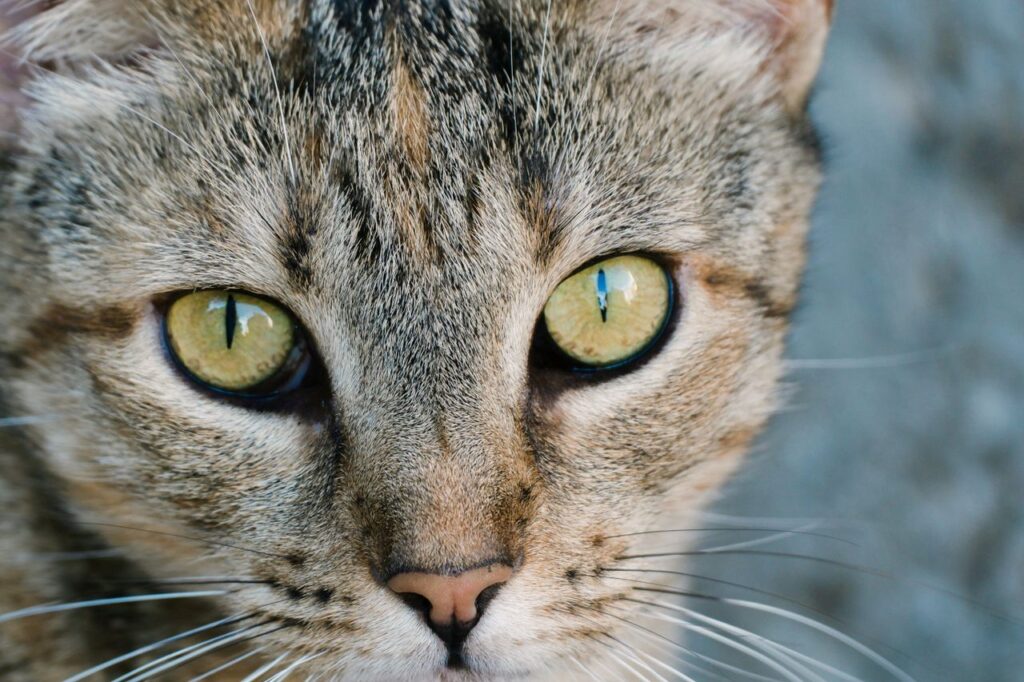
I almost did not notice it at first. Mango’s right eye, which had always been a clear, bright green, seemed slightly duller than her left. Therefore, I assumed it was simply the lighting in the room and did not think much more about it.Cat Eye Color Changes
However, over the following two weeks, the difference became unmistakable. Her right iris had developed a brownish tinge that her left eye did not have. Furthermore, this asymmetry between two eyes that should match is exactly the kind of detail that warrants a vet visit.
The diagnosis was iris melanosis — a relatively common, usually benign pigment change. However, my vet explained that the same symptom can occasionally indicate something far more serious. Therefore, she recommended monitoring with periodic checkups rather than dismissing it.
This guide covers everything about cat eye color changes — what causes them, which are harmless, and which need prompt veterinary attention.
Is Eye Color Change Normal in Cats?
Kittens are born with blue eyes, and the true adult eye color does not develop until around six to eight weeks of age, sometimes taking up to three months to fully stabilize. Therefore, eye color change during kittenhood is completely normal and expected.
However, in adult cats, eye color is generally stable and should not change. Furthermore, when cat eye color changes occur in an adult cat, this represents a genuine change in the eye that deserves attention — even though many causes turn out to be harmless.
What Causes Cat Eye Color Changes in Adult Cats?
1. Iris Melanosis — Benign Pigment Spots
Iris melanosis is one of the most common causes of cat eye color changes in adult and senior cats. Therefore, this deserves detailed explanation since it is both common and usually benign.
This condition involves the gradual accumulation of pigment-producing cells called melanocytes within the iris — the colored part of the eye. As a result, small brown or black spots, or a generalized darkening, appear within the iris, often starting subtly and progressing slowly over months to years.
Iris melanosis typically begins as small, flat, brown spots and can progress to involve larger areas of the iris. Furthermore, in most cases, it remains a cosmetic change without affecting vision or causing discomfort.
However, a small percentage of cases progress to a malignant form called diffuse iris melanoma. Therefore, this is precisely why any new pigment change in a cat’s eye should be examined by a vet and monitored regularly — typically with photographs taken at intervals to track whether the pigmentation is spreading, thickening, or becoming raised, all of which suggest progression toward malignancy.
2. Uveitis
Inflammation of the iris and surrounding structures — uveitis — can cause the iris to appear a different color than normal, often darker or with a muddy, indistinct appearance instead of clear, defined coloring. Therefore, this change is usually accompanied by other signs.
Uveitis has many possible causes including infections, immune-mediated disease, trauma, or systemic illness such as feline leukemia virus or feline immunodeficiency virus. Furthermore, signs alongside the color change typically include redness, an irregular or unusually small pupil, cloudiness, and discomfort.
Therefore, uveitis requires prompt veterinary investigation, both to treat the inflammation itself and to identify any underlying systemic cause.
3. Iris Melanoma
Diffuse iris melanoma is the most serious cause of cat eye color change. Furthermore, it represents the most common malignant eye tumor in cats and typically begins as what initially looks like simple iris melanosis before showing signs of progression.
Warning signs that pigment changes may be malignant rather than benign include:
- Rapid spreading of pigmentation across the iris
- Raised or thickened areas rather than flat spots
- Irregular pupil shape developing
- Glaucoma developing in the affected eye
- Increased eye size
Therefore, any cat with iris pigment changes should have regular veterinary eye examinations — typically every six months — to monitor for these warning signs. Early detection of melanoma, before it spreads beyond the eye, significantly improves outcomes, and removal of the affected eye is often curative if performed before the tumor spreads.
4. Lymphoma Affecting the Eye
Lymphoma, a cancer of the lymphatic system, can occasionally affect the eye and cause changes in iris appearance alongside other signs of inflammation. Therefore, this is typically accompanied by other systemic signs of illness, and diagnosis requires broader investigation beyond the eye alone.
5. Feline Leukemia Virus and Feline Immunodeficiency Virus
Both FeLV and FIV can cause uveitis as part of their effect on the immune system, leading to color and appearance changes in the iris. Furthermore, cats with these viral infections often show other signs of immune dysfunction, including recurrent infections and weight loss.
Therefore, any cat showing eye color changes alongside other signs of illness should be tested for these viruses if status is unknown.
6. Corneal Scarring
While not technically a change in the iris itself, scarring of the cornea — the clear front surface of the eye — can make the eye appear to have a different color or cloudiness when viewed from outside. Therefore, this is distinct from true iris color change but can sometimes be confused with it.
Corneal scarring typically results from previous injury, infection, or chronic inflammation, such as repeated herpesvirus-related corneal ulcers.
7. Cataracts
Cataracts cause clouding of the lens behind the iris, which can create the appearance of a color change, particularly a bluish-white or grey haze over the pupil area. Therefore, this differs from iris pigment changes because it affects the lens rather than the iris itself.
Cataracts are less common in cats than dogs but do occur, often secondary to diabetes, uveitis, or as an inherited condition in certain breeds.
8. Age-Related Changes
Some cats develop a condition called lenticular sclerosis with age — a hazy, bluish-grey appearance to the lens that is distinct from a true cataract and does not significantly affect vision. Therefore, this is a normal aging change rather than a disease process, though it can be difficult to distinguish from early cataracts without veterinary examination.
How to Monitor Eye Color Changes at Home
If your vet has identified a benign pigment change requiring monitoring rather than immediate treatment, tracking the change accurately at home provides valuable information.
Take photographs regularly — under consistent lighting conditions, ideally natural daylight, every few weeks. Therefore, comparing photographs over time reveals subtle changes that might be missed in daily observation.
Note the characteristics — is the area flat or raised? Has the size changed? Has the shape become irregular? Furthermore, recording these details helps your vet assess progression at follow-up visits.
Watch for accompanying symptoms — any new redness, discharge, squinting, or change in pupil shape should prompt an earlier vet visit rather than waiting for the next scheduled check.
Keep scheduled follow-up appointments — typically every six months for monitoring benign pigment changes, as recommended by your vet.
When to See a Vet
Schedule a vet visit within a week if:
- You notice any new color change in one or both eyes
- The change has been present for a while but you have not yet had it evaluated
- The cat seems otherwise completely well
See a vet promptly if:
- The pigment area appears raised or thickened rather than flat
- The change is spreading or growing
- The pupil shape has become irregular
- There is any redness, discharge, or apparent discomfort alongside the color change
Seek urgent care if:
- The eye appears to be enlarging
- The cat shows signs of pain
- Vision appears to be affected — bumping into objects, reluctance to jump
- Cloudiness has developed rapidly
How Vets Diagnose the Cause
Complete ophthalmic examination — assessing the entire eye structure, looking for the specific characteristics of the pigment change.
Eye pressure measurement — checking for glaucoma, which can develop secondary to iris melanoma.
Photography for comparison — establishing a baseline to monitor for change over subsequent visits.
Blood tests — including FeLV and FIV testing, particularly if uveitis or systemic illness is suspected.
Referral to a veterinary ophthalmologist — for cases with concerning features, a specialist can perform more detailed examination and advise on monitoring intervals or treatment.
Biopsy or removal — in cases with strong suspicion of malignancy, removal of the affected eye may be both diagnostic and therapeutic.
Final Thoughts
Mango’s eye continues to show the same gradual brown discoloration, now monitored through twice-yearly checkups and photographs that my vet compares at each visit. Furthermore, three years since I first noticed it, there has been no progression — no thickening, no spreading, no change in pupil shape. It remains exactly what it appeared to be from the start: benign iris melanosis.
However, I am genuinely grateful that I did not dismiss that first subtle difference as simply lighting. Therefore, the lesson from her experience is straightforward — cat eye color changes deserve attention, even when they turn out to be harmless, because the few cases that are not harmless benefit enormously from being caught early.
Look closely at your cat’s eyes from time to time. Notice the details. And when something looks different, get it checked.
⚠️ Disclaimer: This article is for informational purposes only and does not replace professional veterinary advice. If you notice any change in your cat’s eye color, consult a licensed veterinarian for evaluation.
Sources: Cornell Feline Health Center, American College of Veterinary Ophthalmologists, VCA Animal Hospitals, American Association of Feline Practitioners (AAFP)