

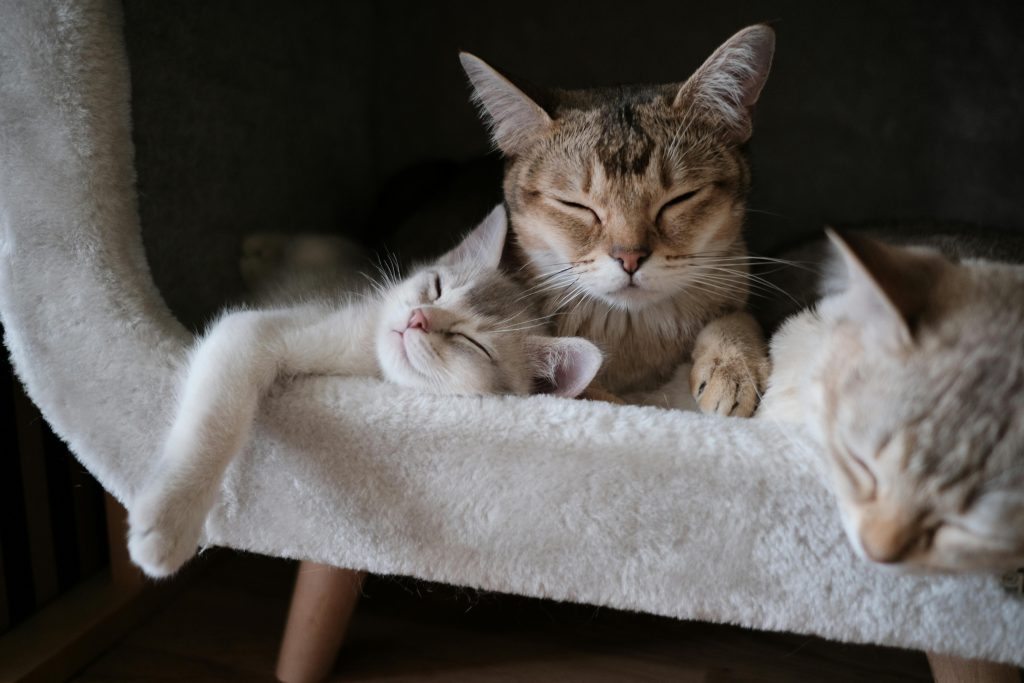
When I brought home my second cat, I made every mistake in the book.
I carried the new cat — a two-year-old rescue named Pepper — directly into the living room where my resident cat, Mango, was sleeping on the sofa. I thought they would sniff each other, maybe hiss once or twice, and then settle into peaceful coexistence by the end of the day.
What actually happened was three weeks of hissing, chasing, blocked doorways, stress-related vomiting from Mango, and Pepper hiding under the spare bed, refusing to come out for meals.
I eventually did everything right — but only after doing everything wrong first. The recovery process took twice as long as it would have if I had introduced them properly from the start.
This guide will save you from making the same mistakes. Whether you are introducing a new cat to a resident cat, a dog, young children, or simply to an empty home for the first time, the principles here will make the process significantly smoother for everyone involved.
Why Cat Introductions Need to Be Done Carefully
Cats are territorial animals. Unlike dogs, which are pack animals and generally welcome new social additions relatively quickly, cats establish strong territorial bonds with their living space. A new cat arriving in the home represents a direct threat to the resident cat’s established territory.
Done without preparation, the introduction triggers a defensive response from the resident cat and a fear response from the new cat. Both are stressed, both feel threatened, and the resulting conflict can establish a hostile dynamic that takes months to repair — and sometimes never fully resolves.
Done correctly — slowly, with careful management of scent and space — the introduction allows both cats to adjust gradually, establish a shared understanding of the territory, and form a relationship based on tolerance or genuine companionship rather than conflict.
The investment of time and patience in a proper introduction pays dividends for the entire shared life of the cats. It is always worth doing correctly.
Before the New Cat Arrives — Preparation
Set Up a Safe Room
The single most important preparation is creating a dedicated safe room for the new cat. This is a room that will be exclusively the new cat’s space for the first stage of the introduction — typically one to two weeks.
Choose a room that:
- Can be completely closed off from the rest of the home
- Has enough space for the cat to move around comfortably
- Is not the resident cat’s primary territory — a spare bedroom works well
- Is quiet and away from the main household activity
Equip the safe room with:
- Food and water bowls
- A litter box — placed as far from the food as possible
- A comfortable bed or hiding spot
- Scratching post
- A selection of toys
- A worn item of your clothing — the familiar scent provides comfort
Prepare the Resident Cat
Before the new cat arrives, ensure the resident cat has had a veterinary checkup and is up to date on vaccinations. A new cat entering the home can introduce pathogens that the resident cat has not previously encountered.
Check that the resident cat has adequate resources throughout the home — multiple feeding stations, multiple litter boxes, multiple elevated resting spots. Resource competition is a major driver of conflict between cats.
The Introduction Process — Stage by Stage
Stage 1 — Separation with Scent Introduction (Days 1 to 7)
On arrival, take the new cat directly to the safe room. Do not allow any contact — visual or physical — with the resident cat at this stage.
Let the new cat settle into the safe room for twenty-four to forty-eight hours before beginning active scent introduction. The cat needs time to decompress from the journey and the stress of the new environment.
Scent swapping:
After the initial settling period, begin scent swapping. This is the foundation of a successful introduction — allowing the cats to become familiar with each other’s scent before ever seeing or meeting each other.
Take a soft cloth or sock and gently rub it against the new cat’s face — where the scent glands are concentrated. Place this cloth near the resident cat’s feeding area. Repeat in the other direction — rub a cloth on the resident cat and place it in the safe room near the new cat’s feeding area.
Feeding both cats near the scent of the other creates a positive association — the smell of the other cat predicts something good.
Repeat this scent swapping daily. Gradually move the scent cloths closer to the feeding bowls over several days until the cloth is placed directly beside the food bowl and both cats are eating comfortably in the presence of the other’s scent.
Door feeding:
After two to three days, begin feeding both cats on opposite sides of the safe room door — the resident cat on one side, the new cat on the other. Start with the bowls far enough from the door that neither cat can smell or hear the other clearly. Gradually move the bowls closer to the door over subsequent meals until both cats are eating directly at the door without signs of stress.
Signs that this stage is going well: both cats approach the feeding area calmly, eat without hesitation, and show no hissing, growling, or refusal to eat.
Signs to slow down: either cat refuses to eat near the door, hisses persistently, stops eating, or shows other signs of stress.
Never rush past signs of stress. Go back a step and proceed more slowly.
Stage 2 — Visual Introduction Without Contact (Days 7 to 14)
Once both cats are eating calmly on opposite sides of the door, it is time to allow visual contact without the ability for physical interaction.
Baby gate method:
Replace the solid door with a baby gate — a tall gate the cats cannot jump over, ideally with a mesh the cats can see through but not reach through. This allows full visual and olfactory contact while maintaining a physical barrier.
Continue feeding both cats near the gate. Allow them to observe each other freely while the gate is in place.
Cracked door method:
If a baby gate is not available, open the safe room door by two to three centimeters and secure it with a door stopper. This allows scent and partial visual contact.
What to expect:
Some hissing and staring during the initial visual introductions is normal. What you are watching for is whether the behavior escalates — sustained, intense staring, crouching into an attack posture, or attempted physical contact through the barrier — or whether it decreases over time as the cats habituate to each other’s presence.
If both cats can be in visual contact while eating or moving about without sustained agitation, the visual introduction stage is progressing well.
Stage 3 — Supervised Free Interaction (Days 14 Onward)
When both cats are showing calm or mildly curious behavior during visual introductions, supervised free interaction can begin.
The first meeting:
Choose a neutral space — a room neither cat considers their primary territory. Allow the new cat to explore this room for a short period before letting the resident cat in — the new cat’s scent will already be present, reducing the resident cat’s territorial response.
Open the safe room door or remove the gate and allow both cats to move freely. Stay present and calm. Do not intervene in every interaction — some hissing and posturing is normal and necessary for the cats to establish their relationship. Intervene only if a genuine physical attack occurs.
Distraction tools: Have a wand toy ready to redirect attention if tension builds. Tossing a treat to each cat in separate directions is an effective way to break a staring standoff without physical intervention.
Keep first meetings short — ten to fifteen minutes — and then separate the cats again. Gradually extend the duration of shared time over the following days as both cats become more comfortable.
Signs the introduction is going well:
- Both cats can be in the same room without sustained hissing or growling
- One or both cats show curiosity rather than fear or aggression
- Both cats continue eating, using the litter box, and behaving normally
- The cats begin to tolerate closer proximity over time
- Eventually, parallel play, shared resting areas, or mutual grooming, which is the gold standard of feline social bonding
Signs to slow down or seek help:
- One cat is consistently preventing the other from accessing food, water, or litter boxes
- Sustained, daily physical attacks — not play fighting, but genuine aggressive attacks
- One cat stops eating, hides excessively, or shows signs of significant stress, such as stress-related illness
- No improvement in tolerance after four to six weeks of proper introduction
Introducing a New Cat When You Have Other Pets
Introducing a Resident Dog
Dogs and cats can coexist very well — but the introduction requires management, particularly if the dog has a high prey drive or has never lived with a cat before.
Prepare the dog first:
Before bringing the cat home, ensure the dog has reliable basic obedience — particularly sit, stay, and leave it. A dog that responds to commands gives you the ability to manage their behavior during introductions.
Use the safe room approach:
Follow the same scent introduction process as for resident cats. Allow the dog to investigate the closed safe room door and become familiar with the cat’s scent before any visual contact.
First visual introduction — dog on leash:
When beginning visual introductions, keep the dog on a leash and ask them to sit or lie down calmly. Allow the cat to approach or retreat completely on their own terms. Reward the dog heavily for calm, settled behavior in the cat’s presence.
Never allow the dog to chase the cat — even in play — during the early stages of introduction. A single chase experience can establish a fear response in the cat that takes months to overcome.
Ensure the cat always has escape routes:
The cat must always have the ability to move away from the dog and access elevated areas that the dog cannot reach. A dog that can corner a cat creates a dangerous situation regardless of the dog’s intentions.
Progress at the cat’s pace:
The cat sets the pace of this introduction. A cat that feels safe and in control of the distance between themselves and the dog will gradually reduce that distance over time. A cat that is rushed will escalate from flight to fight.
Introducing Children
Children — particularly young children — need preparation before meeting a new cat.
Teach children before the cat arrives:
- Always move slowly and quietly around the cat
- Never chase, grab, or pick up the cat without permission
- Never disturb the cat when eating, sleeping, or using the litter box
- Let the cat come to them — reaching toward the cat is less effective than waiting for the cat to approach
- If the cat walks away, let it go — it will come back when it is ready
Supervise all interactions between young children and a new cat closely during the initial weeks. Teach children to read basic cat body language — a tucked tail, flattened ears, or a puffed tail means the cat needs space.
A cat that feels safe with children will gradually increase its willingness to interact. A cat that is repeatedly handled against its will will become fearful and defensive — and a fearful cat is a cat that eventually scratches or bites.
Managing Resources During the Introduction Period
Resource competition — competition for food, water, litter boxes, and resting spots — is one of the most significant drivers of conflict between cats in multi-cat households.
The golden rule: one of each resource per cat, plus one extra.
Two cats need at least:
- Three litter boxes in different locations
- Two feeding stations in different locations
- Two water sources
- Multiple elevated resting spots
- Multiple scratching posts
Place resources so that no single cat can control access to all of them simultaneously. A dominant cat that stations itself near the only litter box or the only feeding station forces the other cat into a state of chronic stress.
How Long Does a Cat Introduction Take?
There is no fixed timeline. The process depends on the individual personalities of the cats involved, their previous socialization history, their ages, and how carefully the introduction is managed.
A rough guideline for typical cases:
- Very compatible cats — two to four weeks to comfortable coexistence
- Average cases — four to eight weeks
- More challenging combinations — three to six months
Some cats never become close companions but learn to coexist peacefully — ignoring each other respectfully and sharing space without conflict. This is a completely acceptable outcome. Not all cats form close bonds, just as not all humans become close friends.
Genuine friendship — sleeping together, mutual grooming, playing together — develops in some pairs and is wonderful when it happens. But peaceful coexistence is the realistic and worthy goal for most introductions.
Common Mistakes to Avoid
Rushing the process — the most common mistake. Going too fast triggers defensive responses that take far longer to resolve than the time saved by rushing.
Forcing interaction — picking up one cat and holding it near the other, or blocking escape routes- creates traumatic experiences that set back the introduction significantly.
Punishing hissing or growling — these are normal communication signals. Punishing them does not reduce the underlying emotion — it removes the warning signals and increases the likelihood of a sudden, escalating attack without warning.
Insufficient resources — resource scarcity drives conflict. Provide more than enough of everything.
Giving up too early — most successful introductions go through a difficult phase. The key is to slow down rather than give up when things get difficult.
Skipping the scent introduction — visual introduction before adequate scent familiarity almost always produces more conflict than a thorough scent introduction followed by visual introduction.
When to Seek Professional Help
Consider consulting a certified feline behaviorist or veterinary behaviorist if:
- After six to eight weeks of correct introduction protocol, there is no improvement in tolerance
- One cat is consistently attacking the other despite management
- One cat has stopped eating, is hiding constantly, or is showing signs of significant stress-related illness
- You are concerned about safety
Anti-anxiety medication prescribed by a vet can sometimes assist introductions in cases where anxiety is severe — not as a substitute for the introduction process, but as a tool that reduces the anxiety response enough to allow progress.
Final Thoughts
A successful multi-cat household is built on patience, preparation, and respect for the natural social structure of cats.
Cats are not antisocial — they are socially selective. Given the right conditions, the right pace, and adequate resources, most cats can learn to share their space peacefully — and many form genuine, lasting bonds with their feline housemates.
The weeks invested in a careful introduction pay returns for years. Take the time. Do it right. The relationship that develops between your cats is worth every careful step.
⚠️ Disclaimer: This article is for informational purposes only and does not replace professional veterinary or behavioral advice. For cats with severe aggression or persistent conflict, consult a certified veterinary behaviorist.
Sources: American Association of Feline Practitioners (AAFP), International Cat Care, Cornell Feline Health Center, American Veterinary Society of Animal Behavior (AVSAB)

Stay Updated with Pet Health Tips
Get simple, expert-backed tips, disease alerts, and care guides for your pets—delivered straight to your inbox.