

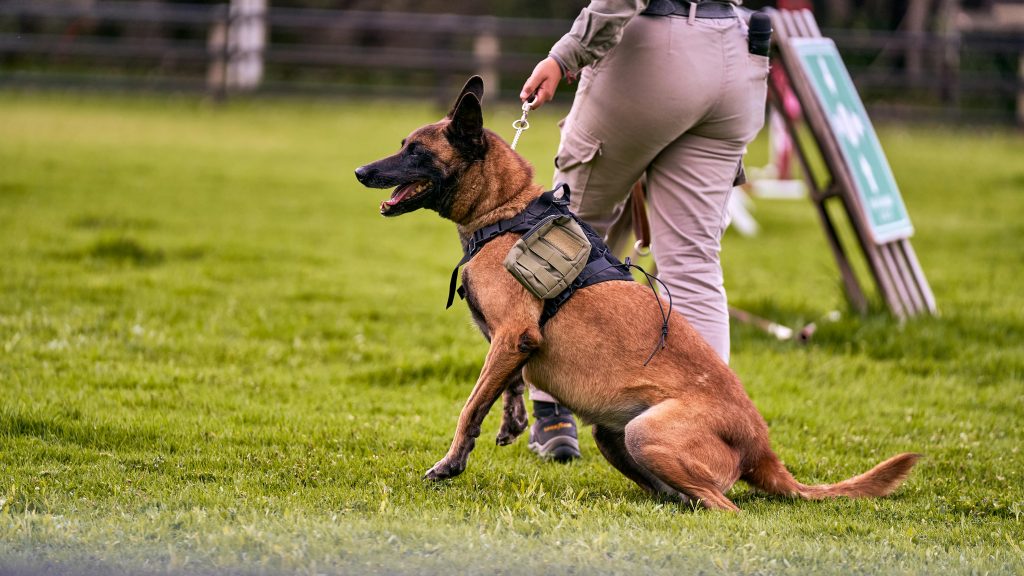
When I first tried to train my dog, I made every mistake possible.
I used the wrong tone of voice. I gave commands too many times in a row. I was rewarded at the wrong moment. And when my dog did not listen, I got frustrated — which made everything worse.
Within a week, my dog had learned nothing, and I had learned one very important lesson: dog training is not about the dog. It is about the owner. The way you communicate, the timing of your rewards, and your patience level determine everything.
Once I understood that, everything changed. Within three weeks of proper training, my dog could sit, stay, come, lie down, and walk on a loose leash. The same dog that seemed impossible to train became one of the most well-behaved dogs I have ever seen.
This guide will teach you exactly what I learned — the right techniques, the right timing, and the right mindset to train any dog successfully.
Why Training Your Dog Is So Important
Training is not just about teaching tricks. It is about communication, safety, and building a relationship built on trust and understanding.
A trained dog is a safer dog. A dog that responds reliably to “come” can be called away from danger. A dog that knows “leave it” will not pick up something toxic from the ground. A dog that walks calmly on a leash is a pleasure to exercise — and gets exercised more as a result.
Training also strengthens the bond between you and your dog. Dogs are social animals that thrive on clear communication and positive interaction. The time you spend training together builds trust and deepens your relationship in a way that nothing else quite does.
And perhaps most importantly, a well-trained dog is a happier dog. Dogs that understand what is expected of them are calmer, more confident, and less anxious than dogs living in a world of unclear expectations and unpredictable consequences.
The Golden Rules of Dog Training
Before teaching any specific command, understand these fundamental principles. They apply to every training session with every dog.
Rule 1 — Always Use Positive Reinforcement
Positive reinforcement means rewarding the behavior you want to see more of. When your dog does something right, reward immediately with a treat, enthusiastic praise, or play. The dog learns that the behavior produces something good and repeats it.
This approach is backed by decades of scientific research and is recommended by veterinary behaviorists worldwide. It works faster than punishment-based methods, produces more reliable results, and does not damage the dog’s trust or create fear.
Punishment — yelling, physical corrections, or scolding — tells the dog what not to do but does not teach what to do instead. It also creates confusion, anxiety, and in some dogs, aggression. Avoid it entirely.
Rule 2 — Timing Is Everything
Dogs connect a reward to whatever they were doing at the exact moment the reward arrives. If your dog sits and you reward them three seconds later, you may be rewarding them for standing up again.
Reward within one to two seconds of the correct behavior. This precise timing is what makes training work. If you struggle with timing, consider using a clicker — a small handheld device that makes a clicking sound. You click the instant the dog performs the correct behavior, then follow with a treat. The click marks the exact moment of success.
Rule 3 — Keep Sessions Short
Dogs — especially puppies — have short attention spans. Training sessions should last five to ten minutes maximum. Two to three short sessions per day produce far better results than one long session.
Always end on a success. Ask for something the dog already knows well, reward enthusiastically, and finish. This leaves the dog in a positive state and eager for the next session.
Rule 4 — One Command, One Word
Choose one word for each command and use it consistently. Do not say “sit” sometimes and “sit down” other times. Do not say “come” sometimes and “come here, boy” other times. Inconsistency confuses dogs.
Make sure everyone in the household uses the same words. A dog cannot generalize — if one person says “sit” and another says “sit down,” the dog learns two different commands or gets confused by both.
Rule 5 — Set the Dog Up to Succeed
Do not make training too hard too fast. If the dog is failing repeatedly, the task is too difficult — make it easier. Break each command into small steps and reward each step. Gradually increase difficulty only when the dog is consistently succeeding at the current level.
Rule 6 — Be Consistent Every Single Day
Training is not something you do for a few weeks and then stop. Commands must be practiced and reinforced regularly for the dog to maintain them reliably. Five minutes of practice every day is far more effective than an hour once a week.
What You Need Before You Start
High-value treats — use small, soft treats that your dog goes crazy for. The treat must be motivating enough to make the dog want to work for it. Good options include small pieces of cooked chicken, cheese, or commercial training treats. Keep treats small — about the size of a pea — so the dog does not fill up quickly.
A quiet environment — start training in a place with no distractions. A quiet room inside the house is ideal for beginners. As the dog masters each command indoors, gradually practice in more distracting environments — the garden, then a quiet street, then a busier area.
A flat collar or harness — avoid training with a choke chain or prong collar. These devices cause pain and fear, which works against positive reinforcement training.
Patience — some dogs learn quickly. Others take more time. Age, breed, previous experience, and individual temperament all affect learning speed. Measure success by progress, not by comparison to other dogs.
The 7 Basic Commands Every Dog Should Know
Command 1 — Sit
Sit is the foundation of all dog training. It is usually the first command taught because it is easy to achieve and immediately useful.
How to teach it:
Hold a treat close to your dog’s nose. Slowly move your hand up and back over the dog’s head. As the nose follows the treat upward, the bottom naturally goes down. The moment the dog’s bottom touches the floor, say “sit” clearly and give the treat immediately, along with enthusiastic praise.
Repeat five times per session. Within a few sessions, most dogs understand the concept. Once the dog is sitting reliably in response to the hand movement, start saying “sit” before the hand movement so the dog learns to respond to the word.
Why it is useful: Ask your dog to sit before meals, before going through doorways, before greeting people, and whenever you need the dog to be calm and still.
Command 2 — Stay
Stay teaches your dog to remain in position until you release them. It is one of the most important safety commands a dog can learn.
How to teach it:
Ask your dog to sit. Open your palm toward the dog and say “stay” in a calm, clear voice. Take one step back. If the dog stays, immediately return, reward, and praise. If the dog moves, say nothing — just calmly reset and try again with a shorter distance.
Gradually increase the three D’s — distance, duration, and distraction — one at a time. First, increase how far you step back. Then increase how long you wait before returning. Then practice with mild distractions present.
Always return to the dog to reward, rather than calling them to you. This keeps “stay” and “come” as separate, reliable commands.
Why it is useful: Stay keeps your dog safe in countless situations — waiting at road crossings, staying calm at the vet, holding still while you open doors.
Command 3 — Come
Come — also called recall — is the most important safety command you will ever teach. A dog that comes reliably when called can be called away from traffic, other dogs, dangerous objects, and any situation where their safety is at risk.
How to teach it:
Start in a small, enclosed space with no distractions. Crouch down, open your arms wide, and in your happiest, most exciting voice, say “come.” When the dog reaches you, reward lavishly — big praise, several treats, lots of enthusiasm. Make coming to you the best thing that has ever happened to your dog.
Never call your dog to you for something unpleasant — a bath, nail trimming, or the end of playtime. If you need to do something the dog dislikes, go and get them instead of calling them. If “come” ever predicts something unpleasant, the dog will stop responding to it.
Gradually practice in larger spaces and then outdoors on a long training leash — a lightweight leash of ten to fifteen meters — before practicing off leash in an enclosed area.
Why it is useful: Reliable recall is a life-saving command. Practice it more than any other command.
Command 4 — Down
Down asks the dog to lie down with their belly on the floor. It is a calming position that helps settle excited or anxious dogs.
How to teach it:
Ask your dog to sit. Hold a treat in your closed fist at the dog’s nose. Slowly lower your hand straight down to the floor. As the dog follows the treat downward, they will naturally lower their elbows to the floor. The moment the elbows touch the floor, say “down” and reward immediately.
If the dog stands up rather than lying down, try luring them under your bent knee or under a low coffee table — the restricted space encourages them to lie flat.
Do not push the dog into position. Lure patiently and reward every step in the right direction.
Why it is useful: Down is useful in restaurants, waiting rooms, during visits, and any time you need the dog to settle calmly for an extended period.
Command 5 — Leave It
Leave it teaches your dog to ignore something and look away from it. This command can prevent your dog from eating something dangerous, picking up rubbish, or approaching something you do not want them to touch.
How to teach it:
Place a treat in your closed fist and present it to the dog at nose level. The dog will sniff, lick, and paw at your fist, trying to get the treat. Wait. The moment the dog pulls their nose away from your fist — even for a second — say “leave it” and immediately reward with a different treat from your other hand.
Repeat until the dog backs away from your fist reliably. Then practice with a treat on the floor covered by your foot. When the dog ignores the treat on the floor, reward with a treat from your hand.
Gradually progress to dropping a treat on the floor and saying “leave it” before the dog can reach it. Reward with a higher-value treat from your hand when the dog complies.
Why it is useful: This command has prevented many dogs from eating toxic substances, dead animals, and sharp objects. Practice it regularly.
Command 6 — No or Ah-Ah
A calm, clear interrupter sound teaches the dog to stop whatever they are doing. “No” works well, as does a short sound like “ah-ah.”
How to teach it:
Use this sound the moment you catch the dog doing something unwanted — chewing furniture, jumping up, or approaching the rubbish bin. Say it once, calmly and clearly. Then immediately redirect the dog to an appropriate behavior and reward that instead.
The key is “once.” Repeating “no no no no” loses all meaning. One clear sound, followed by redirection to what you do want.
Never use this sound in an angry or aggressive tone. The goal is to interrupt the behavior, not frighten the dog.
Command 7 — Heel or Walk Nicely
Walking calmly on a loose leash without pulling is one of the most practically useful skills a dog can have — and one of the most commonly neglected.
How to teach it:
Hold the leash in your right hand and treats in your left. Start walking. The moment the leash becomes tight from the dog pulling forward, stop completely. Do not move. Wait. When the dog turns back to look at you and the leash goes loose, say “yes” and reward. Then continue walking.
Repeat consistently. The dog learns that pulling stops all forward movement. Walking calmly keeps things moving and produces rewards.
Be patient — leash manners take longer to establish than most commands because the dog has usually been practicing pulling for some time. Consistency is everything. Every single walk must follow the same rule — pulling stops movement, loose leash keeps movement going.
Training at Different Life Stages
Puppies (8 Weeks to 6 Months)
This is the most important training window. Puppies learn incredibly fast during this period and habits formed now last a lifetime. Start with sit, come, and leave it. Keep sessions to three to five minutes. Use tiny, soft treats. Socialize extensively alongside basic training.
Adolescent Dogs (6 Months to 2 Years)
Adolescence is the most challenging training period. Dogs at this stage test boundaries, become easily distracted, and may seem to forget commands they previously knew well. Stay consistent. Do not give up. Increase exercise to manage energy levels. Adolescence passes — consistency during this period produces a reliably trained adult dog.
Adult Dogs
Adult dogs are absolutely trainable. The saying “you cannot teach an old dog new tricks” is completely false. Adult dogs often learn faster than puppies because they have longer attention spans and are less easily distracted. Training an adult rescue dog or a dog that has never been trained before is very achievable with patience and the right approach.
Senior Dogs
Older dogs can learn new commands and benefit greatly from continued mental stimulation. Keep sessions shorter and lower impact. Be patient with physical commands like down if the dog has joint issues — adapt commands to suit their physical comfort.
Common Training Mistakes to Avoid
Repeating commands — saying “sit sit sit sit” teaches the dog that the first “sit” means nothing. Say the command once. If there is no response, help the dog into position with a lure, then reward.
Training when frustrated — dogs read human emotion very well. If you are frustrated, the dog becomes anxious, and learning stops. End the session, take a break, and come back later.
Inconsistent rules — allowing the dog on the sofa sometimes and not others creates confusion. Whatever the rule is, it must apply all the time and with all family members.
Rewarding too late — reward within one to two seconds of the correct behavior. Rewarding three seconds later may reinforce something else entirely.
Skipping the basics — owners often want to teach complex behaviors before the basic ones are solid. Make sure sit, stay, and come are very reliable before moving on to more advanced training.
Not practicing in different locations — a dog that sits reliably in the kitchen may not sit at the park. Practice every command in multiple locations and with gradually increasing levels of distraction.
When to Consider Professional Help
Most basic training can be accomplished at home with patience and consistency. But professional help is worth considering if:
- The dog shows aggression — growling, snapping, or biting
- The dog has severe anxiety or fear that makes training impossible
- You have been training consistently for weeks with no progress
- The dog has a specific behavioral problem, like resource guarding or separation anxiety
Look for a trainer who uses positive reinforcement methods and is certified by a reputable organization. Avoid trainers who use punishment, physical corrections, or dominance-based techniques — these approaches are outdated and counterproductive.
Final Thoughts
Training your dog is one of the greatest investments of time you will ever make. The hours you spend teaching basic commands come back to you every single day — in safer walks, calmer behavior, easier vet visits, and a dog that is a genuine pleasure to live with.
Start simple. Be consistent. Be patient. Celebrate small wins. And remember — every time your dog gets it right, that is not just a trick learned. That is trust built, communication improved, and a bond deepened.
Your dog wants to understand you. Training is how you teach them how.
⚠️ Disclaimer: This article is for informational purposes only. For dogs with serious behavioral issues such as aggression or severe anxiety, always consult a qualified veterinary behaviorist or certified professional dog trainer.
Sources: American Kennel Club (AKC), Association of Professional Dog Trainers (APDT), VCA Animal Hospitals, American Veterinary Society of Animal Behavior (AVSAB)

Stay Updated with Pet Health Tips
Get simple, expert-backed tips, disease alerts, and care guides for your pets—delivered straight to your inbox.