

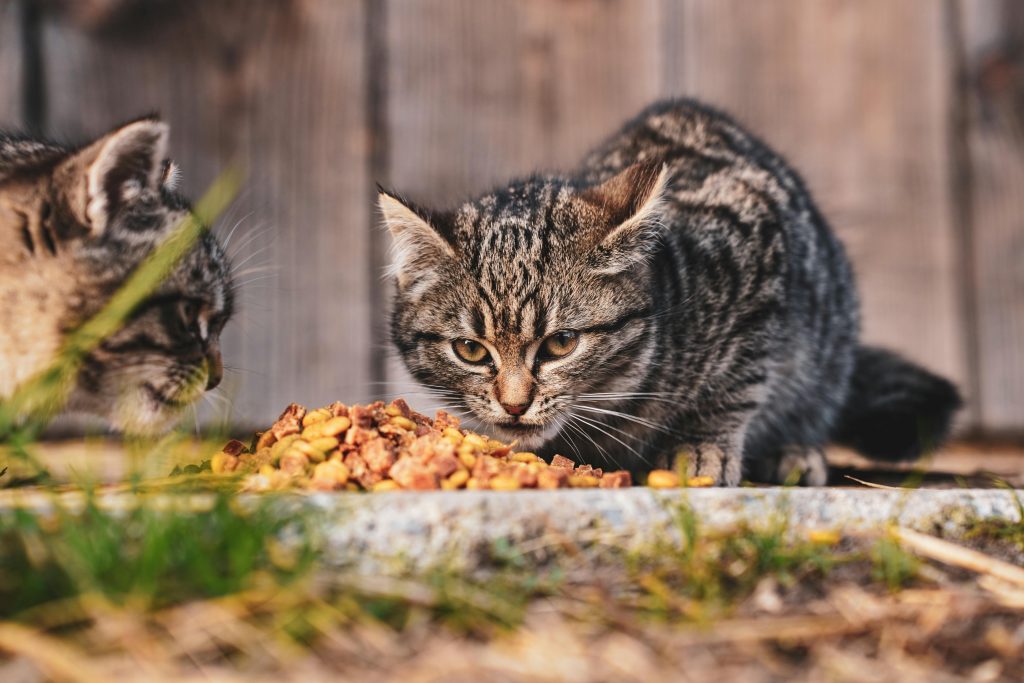
When I first adopted Mango, I walked into the pet store intending to spend five minutes choosing cat food. Forty-five minutes later, I was still standing in the aisle, completely overwhelmed by the wall of options in front of me.
Grain-free. High protein. Indoor formula. Sensitive stomach. Kitten. Adult. Senior. Wet. Dry. Raw. Prescription. Every bag and tin made claims that sounded equally convincing and equally impossible to verify.
I bought something in the middle price range with a picture of a salmon on the front and hoped for the best.
It was not the worst choice. But it was not the best one either. And over the years, as I learned more about feline nutrition, I realized that the food I choose for Mango every day is one of the most consequential health decisions I make for her — affecting her weight, coat, kidney health, urinary health, energy, and longevity.
This guide covers everything you need to know to make that decision well — from the fundamental nutritional requirements of cats to how to read a food label, what to look for, what to avoid, and how to choose the right food for your cat’s specific age and health status.
The Most Important Thing to Understand About Cat Nutrition
Cats are obligate carnivores. This is the single most important fact in feline nutrition and the foundation of every good feeding decision.
Unlike dogs — which are omnivores and can derive nutrition from both animal and plant sources — cats must eat animal tissue to survive. Their bodies have evolved over millions of years to obtain all essential nutrients from prey. They have lost the metabolic pathways that allow other animals to synthesize certain critical nutrients from plant sources.
This means that no matter how beautifully marketed a cat food is, if it is not primarily composed of animal-derived ingredients, it is not meeting the fundamental nutritional requirements of a cat.
The practical implications of obligate carnivory for cat food selection:
Taurine must come from animal tissue.
Taurine is an amino acid essential for heart function, vision, reproductive health, and immune function in cats. Unlike dogs and humans, cats cannot synthesize adequate taurine from other amino acids. They must consume it preformed — from meat, fish, and organ tissue. A taurine-deficient cat develops dilated cardiomyopathy — a fatal heart condition — and retinal degeneration leading to blindness. All commercial cat foods are now required to contain adequate taurine, but this remains a reason to choose meat-based foods over plant-heavy formulations.
Arachidonic acid must come from animal fat.
Cats cannot convert linoleic acid — found in plant oils — to arachidonic acid as dogs and humans can. They require preformed arachidonic acid from animal sources.
Preformed Vitamin A must come from animal tissue. Cats cannot convert beta-carotene from plants to Vitamin A. They require preformed retinol from liver and other animal sources.
Cats need high protein. Cats use protein as a primary energy source to a far greater degree than dogs or humans. They have a permanently elevated protein requirement — their liver enzymes are constantly prepared to process large amounts of protein regardless of dietary intake. A low-protein diet leaves a cat in a state of constant protein deficit that accelerates muscle loss and aging.
Cats have limited carbohydrate metabolism. Cats evolved eating prey, which contains almost no carbohydrates. Their digestive systems have a very limited ability to process carbohydrates, and their insulin response to dietary carbohydrates is less efficient than in dogs or humans. High-carbohydrate diets — particularly those based on grains and plant starches — contribute to obesity, diabetes, and chronic disease in cats.
Wet Food vs Dry Food — The Most Important Decision
The debate between wet and dry food is one of the most discussed topics in cat nutrition. Understanding the genuine differences between them allows you to make an informed decision rather than simply choosing based on convenience or cost.
The Case for Wet Food
Moisture content is the most compelling argument for wet food. Wet food contains approximately seventy to eighty percent water, closely approximating the water content of a cat’s natural prey. This matters because cats have a naturally low thirst drive, having evolved in arid environments where most of their hydration came from the prey they ate rather than from drinking.
Cats fed primarily dry food must compensate by drinking significantly more water than their biology naturally drives them to do — and most do not compensate adequately. The result is chronic mild dehydration that has real health consequences.
Research consistently links dry food diets — particularly exclusive dry food diets — to higher rates of urinary tract disease, including feline idiopathic cystitis, urinary crystals, and urethral blockages. The concentrated, less dilute urine produced by inadequately hydrated cats is more irritating to the bladder wall and more favorable for crystal formation.
Chronic mild dehydration also places additional stress on the kidneys, which must work harder to concentrate the small volumes of dilute urine produced by a dehydrated cat. Many veterinary nutritionists believe that the high prevalence of kidney disease in aging cats is at least partly attributable to decades of dry food feeding.
Higher protein, lower carbohydrate — most wet foods have a more favorable nutrient profile than dry foods. Because wet food does not need to be extruded into pellets — a manufacturing process that requires a significant starch content to hold the shape — wet foods can be formulated with higher meat content and lower carbohydrate levels.
Palatability — most cats prefer the smell, texture, and taste of wet food to dry. This is significant for cats with reduced appetite — from illness, stress, or advancing age — for whom palatability is a meaningful consideration.
The Case for Dry Food
Convenience — dry food can be left out for extended periods without spoiling, making it practical for owners who cannot be home for multiple meals per day.
Cost — dry food is generally less expensive per calorie than wet food.
Dental health — some manufacturers claim that dry food helps clean teeth through the mechanical action of chewing. The evidence for this is limited — most cats swallow small dry food pieces with minimal chewing, and the cleaning effect does not reach below the gumline, where periodontal disease develops. Dedicated dental diet kibbles with specific mechanical properties — such as Hill’s t/d — have some evidence of dental benefit, but standard dry food does not.
Caloric density — for cats that need to gain weight or maintain weight with minimal food volume, dry food’s caloric density can be useful.
The Practical Recommendation
Most veterinary nutritionists recommend wet food as the primary diet for cats, with dry food used as a supplement if desired rather than as the main food source.
A practical approach for most households:
Feed wet food as the primary diet — one to two meals of wet food daily provides the moisture and nutrient profile cats need.
If using dry food, provide it as a small supplementary meal or as enrichment in puzzle feeders rather than as the main food source.
Always ensure fresh water is available, regardless of diet — ideally from multiple sources and from a cat water fountain, which many cats prefer.
How to Read a Cat Food Label
Understanding cat food labels allows you to evaluate quality beyond marketing claims.
The Ingredient List
Ingredients are listed in descending order by weight before processing. The first ingredient should be a named animal protein — chicken, turkey, salmon, tuna, beef, or lamb. If the first ingredient is a grain, a plant product, or a vague term like “meat” or “poultry,” the food is likely lower quality.
Named protein sources — chicken, turkey, salmon — are preferable to vague terms like “poultry,” “meat,” or “fish.” Named sources allow you to identify specific allergens and assess quality.
Meat meals — chicken meal, turkey meal — are concentrated, dried forms of meat with the moisture removed. Chicken meal contains more protein by weight than fresh chicken because fresh chicken is approximately seventy percent water. A small amount of named meal is acceptable and does not indicate poor quality. However, vague meals like “poultry meal” or “meat and bone meal” are lower quality.
By-products — named by-products such as chicken by-products include organ meat — liver, kidneys, heart — which are actually highly nutritious and represent parts of the prey a wild cat would eat. They are not inherently low quality. Vague by-products — “animal by-products” without a named species — are less desirable because their composition is variable and uncontrolled.
Grains and carbohydrates — small amounts of digestible carbohydrates like brown rice, oats, or sweet potato are acceptable. Corn, wheat, and soy as primary carbohydrate sources are less desirable — cats have limited ability to digest these efficiently.
Artificial preservatives — BHA, BHT, and ethoxyquin are chemical preservatives associated with health concerns in some research. Natural preservatives — vitamin E as mixed tocopherols, vitamin C as ascorbic acid — are preferable.
Artificial colors serve no nutritional purpose and are unnecessary. Avoid foods with artificial colors.
The Guaranteed Analysis
The guaranteed analysis lists minimum percentages of crude protein and crude fat, and maximum percentages of crude fiber and moisture.
When comparing wet and dry foods, these numbers cannot be compared directly because of the vast difference in moisture content. To compare them meaningfully, the nutrients must be calculated on a dry matter basis — removing the moisture from the equation.
Dry matter basis calculation:
Divide the nutrient percentage by the dry matter percentage of the food, which is 100 minus the moisture percentage.
For example, a wet food with 10% protein and 78% moisture has a dry matter percentage of 22%. Dry matter protein = 10 ÷ 22 × 100 = 45.5%.
A dry food with 30% protein and 10% moisture has a dry matter percentage of 90%. Dry matter protein = 30 ÷ 90 × 100 = 33.3%.
The wet food in this example actually has significantly more protein on a dry matter basis than the dry food, despite appearing to have much less protein from the label.
The AAFCO Statement
Look for a statement from the Association of American Feed Control Officials — AAFCO — that the food is “complete and balanced” for the appropriate life stage. This means the food meets the nutritional standards established by AAFCO for that life stage. Without this statement, the food may be intended as a supplemental treat rather than a complete diet.
Best Cat Food by Life Stage
Kitten Food — Birth to 12 Months
Kittens grow rapidly during the first year of life and have dramatically higher energy, protein, fat, calcium, and phosphorus requirements than adult cats. Kitten food is specifically formulated to meet these elevated requirements.
Key characteristics of good kitten food:
- High protein — minimum thirty percent on a dry matter basis
- Higher fat content for energy — minimum eighteen percent on a dry matter basis
- Adequate calcium and phosphorus for bone development
- DHA — an omega-3 fatty acid that supports brain and eye development
- AAFCO statement for growth or all life stages
Feed kitten food from weaning — approximately four weeks — until twelve months of age. After twelve months, transition gradually to adult food.
Feed kittens three to four times per day until six months of age, then twice daily.
Adult Cat Food — 1 to 7 Years
Adult cat food is formulated for maintenance — meeting the nutritional needs of a healthy adult cat at an appropriate caloric level for their activity and size.
Key characteristics of good adult cat food:
- Named animal protein as the primary ingredient
- High protein on a dry matter basis — minimum thirty percent
- Low to moderate carbohydrate content
- Adequate taurine — all reputable commercial foods meet this requirement
- AAFCO statement for adult maintenance or all life stages
Senior Cat Food — 7 Years and Older
Senior cat foods are formulated to address the changing needs of older cats. However, it is important to note that the formulation of senior foods varies widely between brands, and there is no regulatory standard for what constitutes a “senior” cat food. Some senior foods are lower in calories — appropriate for overweight cats. Others are enriched with joint supplements, antioxidants, and omega-3 fatty acids. Some are lower in protein, which is not appropriate for healthy senior cats, who actually have higher protein requirements than younger adults.
The best approach for a senior cat is to choose food based on their individual health status — ideally in consultation with a vet — rather than simply choosing any food labeled “senior.”
A healthy senior cat without kidney disease does not need a restricted-protein senior food. A senior cat with kidney disease requires a specific prescription kidney diet. A senior cat with hyperthyroidism may benefit from a prescription iodine-restricted diet.
Prescription and Therapeutic Diets
Prescription diets are formulated to manage specific medical conditions. They are significantly more carefully controlled in their nutrient composition than standard commercial foods and have clinical evidence supporting their use.
Common prescription cat diets include:
Kidney diets — restricted phosphorus, moderate high-quality protein, adjusted potassium. For cats with chronic kidney disease.
Urinary diets — promote optimal urine pH and volume to reduce crystal formation. For cats with recurrent urinary problems.
Hypoallergenic or hydrolyzed protein diets — for cats with food allergies. The protein is either from a novel source the cat has never eaten before, or hydrolyzed — broken into fragments too small to trigger an immune response.
Weight management diets — higher protein, lower calorie, higher fiber. For overweight cats.
Dental diets — specifically structured kibble that provides mechanical cleaning. For cats with dental disease.
Gastrointestinal diets — highly digestible, gentle formulations for cats with IBD, pancreatitis, or sensitive stomachs.
Prescription diets require a veterinary diagnosis and prescription. Do not use prescription foods without veterinary guidance — using the wrong prescription diet can worsen the condition it is intended to manage.
Foods to Avoid Giving Your Cat
Toxic Foods
Lilies — all parts of true lily plants are extremely toxic to cats and can cause fatal kidney failure with even small exposures. This includes Easter lilies, tiger lilies, Asiatic lilies, and daylilies. This is a food safety issue relevant to any cat that might access cut flowers or houseplants.
Onions, garlic, leeks, and chives — all members of the allium family damage red blood cells and cause hemolytic anemia in cats. This applies in all forms — raw, cooked, dried, and powdered.
Grapes and raisins can cause acute kidney failure in cats, though the toxic mechanism is not fully understood.
Chocolate — contains theobromine, which cats cannot metabolize. Dark chocolate and baking chocolate are the most dangerous.
Xylitol — an artificial sweetener found in many sugar-free products, certain peanut butters, and some medications. Causes hypoglycemia and potential liver failure in cats.
Alcohol — even tiny amounts are toxic to cats.
Caffeine — coffee, tea, energy drinks, and chocolate all contain methylxanthines that are toxic to cats.
Raw fish in large quantities — contains thiaminase, an enzyme that destroys thiamine — Vitamin B1. Regular feeding of raw fish can cause thiamine deficiency and neurological disease. Cooked fish does not carry this risk as heat destroys thiaminase.
Dog food as a primary diet — dog food does not contain adequate taurine for cats and should not be used as a cat’s main food source. Occasional exposure is not harmful, but regular feeding risks taurine deficiency.
Foods That Are Not Toxic But Best Avoided
Cow’s milk and dairy products — most adult cats are lactose intolerant. While small amounts rarely cause serious harm, dairy regularly causes digestive upset — diarrhea, vomiting, and gas — in most cats.
Raw meat — while raw feeding is practiced by some cat owners, raw meat carries real risks of bacterial contamination — Salmonella, Campylobacter, E. coli — and parasites. If considering a raw diet, research thoroughly and consult a veterinary nutritionist.
Raw eggs — contain avidin, a protein that blocks biotin absorption with regular feeding. Cooked eggs are safe and nutritious.
Bones — cooked bones splinter dangerously and can cause intestinal perforation. Raw bones carry bacterial contamination risks. Neither is recommended as a regular food item.
Highly salted or seasoned foods — human food is typically far too salty for cats. Excess sodium causes thirst and, in large amounts, sodium toxicity.
Feeding Practices That Support Health
Establish a Feeding Schedule
Feed adult cats twice daily at consistent times. Routine supports digestive health and makes it easy to monitor whether your cat is eating normally.
Free feeding — leaving food available at all times — is convenient but frequently leads to obesity, particularly in indoor cats. If using dry food, measured portions at set meal times are preferable to free access.
Monitor Body Weight Regularly
Weigh your cat monthly. Gradual weight gain or loss is easy to miss without regular measurement. A kitchen scale provides accurate results. Record the weights and review the trend over time.
Adjust portion size based on body condition — the amount on the label is a starting point, not a fixed rule. Every cat’s caloric needs differ based on activity level, metabolic rate, age, and health status.
Transition Foods Slowly
When changing foods, mix increasing proportions of the new food with decreasing proportions of the old food over seven to ten days. Abrupt changes cause digestive upset — vomiting and diarrhea — even when both foods are high quality.
Keep Food Fresh
Wet food left out for more than thirty to sixty minutes at room temperature begins to spoil. Refrigerate unused portions and warm slightly before serving. Dry food should be stored in a sealed container away from heat and light to preserve freshness and prevent rancidity of fats.
Provide Multiple Water Sources
Fresh water should be available at all times in multiple locations throughout the home. Many cats prefer water away from their food. Cat water fountains attract cats that prefer moving water and significantly increase daily water intake.
Common Feeding Mistakes to Avoid
Feeding only dry food — the most widespread and consequential nutritional mistake in cat care.
Overfeeding — obesity is the most common preventable health problem in cats. Follow feeding guidelines and monitor body condition.
Feeding dog food does not meet cats’ specific nutritional requirements.
Giving milk — most adult cats are lactose intolerant.
Ignoring label reading — price and marketing claims are not reliable indicators of quality.
Sudden food changes — always transition gradually.
Ignoring changes in eating behavior — reduced appetite, changed preferences, or increased appetite are all clinical signals worth investigating.
Final Thoughts
What you put in your cat’s bowl every day is one of the most powerful health interventions available to you. Good nutrition does not guarantee a long and healthy life — but poor nutrition consistently shortens it and diminishes its quality.
The principles are not complicated. Feed primarily wet food. Choose foods with named animal protein as the primary ingredient. Avoid excessive carbohydrates. Keep your cat at a healthy weight. Provide fresh water always. Adjust the diet as your cat ages and as their health needs change.
Forty-five minutes in a pet store aisle does not have to end in confusion. With the knowledge in this guide, you can make that decision with confidence.
⚠️ Disclaimer: This article is for informational purposes only and does not replace professional veterinary nutritional advice. For cats with specific health conditions, always consult a licensed veterinarian before changing diet.
Sources: American Association of Feline Practitioners (AAFP), Cornell Feline Health Center, Association of American Feed Control Officials (AAFCO), VCA Animal Hospitals, Journal of Feline Medicine and Surgery

Stay Updated with Pet Health Tips
Get simple, expert-backed tips, disease alerts, and care guides for your pets—delivered straight to your inbox.