

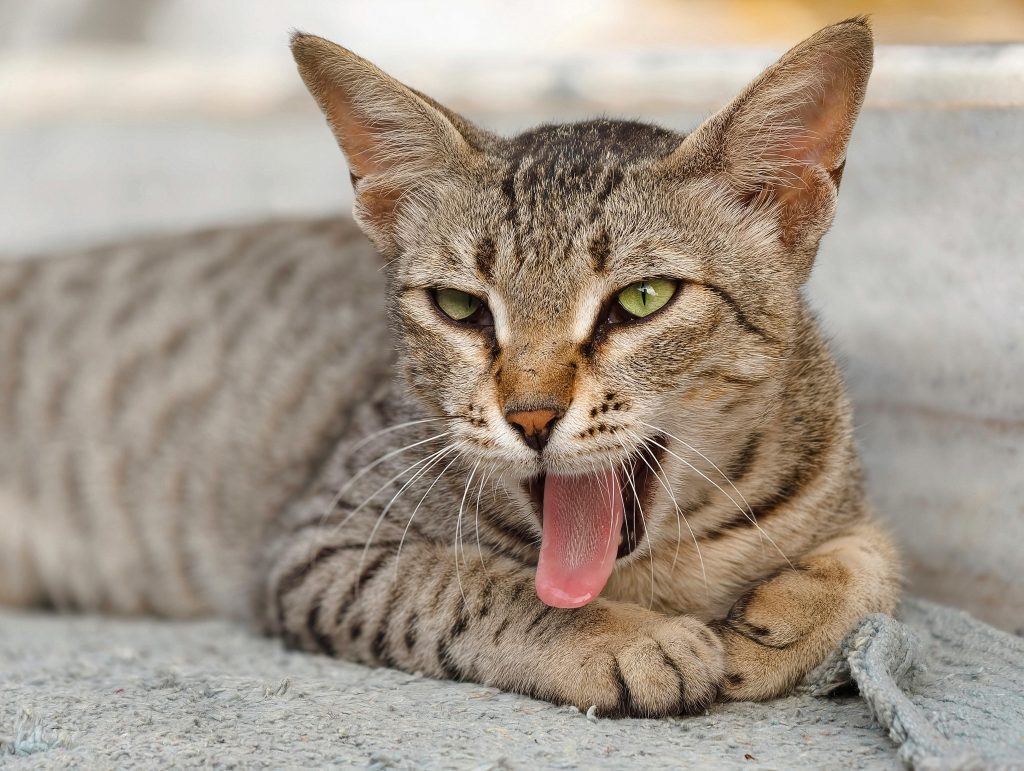
My cat Mango vomited for the first time when she was about six months old. I panicked completely. I called my vet, described everything in detail, and was told — gently but clearly — that occasional vomiting in cats is normal and that what I had described sounded like a hairball.
I felt slightly embarrassed. But I also learned something important that day: not all cat vomiting is equal. Some vomiting is completely normal. Some is a warning sign that needs attention. And some is a medical emergency that requires immediate action.
Knowing which is which could save your cat’s life.
This guide covers every common cause of vomiting in cats, how to tell the difference between normal and concerning vomiting, what to watch for at home, and when you must go to the vet without waiting.
Is Cat Vomiting Normal?
The honest answer is — sometimes yes, sometimes no.
Cats vomit more readily than most other animals. Their digestive systems are relatively sensitive, and several completely normal biological processes produce occasional vomiting. An otherwise healthy cat that vomits once or twice a month and is completely normal between episodes is not necessarily cause for alarm.
However, vomiting is also one of the most common signs of illness in cats. The challenge is distinguishing between normal, occasional vomiting and vomiting that signals a problem requiring veterinary attention.
The key factors to consider are frequency, appearance of the vomit, timing, and whether other symptoms are present alongside the vomiting.
Common Causes of Cat Vomiting
1. Hairballs
Hairballs are the most common cause of vomiting in cats and the one most owners are familiar with. As cats groom themselves, they swallow loose fur. Most of this fur passes through the digestive system without issue. But when fur accumulates in the stomach, the cat vomits it up as a cylindrical mass of compacted hair — often mixed with food or digestive fluid.
What hairball vomiting looks like: The cat may retch and gag for several seconds before producing a tubular or sausage-shaped mass of hair. Despite the alarming sound of the retching, the cat typically appears completely normal immediately afterward.
How often is normal: Once or twice a month is generally considered normal for cats that shed heavily. More frequent hairballs may indicate excessive grooming — which can itself be a sign of skin problems or anxiety — or insufficient dietary fiber.
What helps: Regular brushing reduces the amount of hair the cat swallows. Hairball-formula cat foods contain additional fiber to help move hair through the digestive tract. Hairball lubricant gels — given once or twice weekly — help hair pass through rather than accumulate.
If your cat is producing hairballs more than once a week or is retching repeatedly without producing anything, consult your vet.
2. Eating Too Fast
Some cats eat so quickly that they swallow air along with food, which triggers the stomach to expel the contents almost immediately after eating. This is called regurgitation rather than true vomiting — the food comes back up quickly, often undigested and in a tubular shape matching the esophagus, without the preceding nausea and retching of true vomiting.
Signs this is the cause: Vomiting occurs within minutes of eating. The vomited material looks like undigested food. The cat then tries to eat the vomited food again. The cat is otherwise completely well.
What helps: Use a puzzle feeder or a slow-feed bowl to force the cat to eat more slowly. Divide the daily food into three or four smaller meals rather than one or two large ones. Raise the food bowl slightly — an elevated bowl can help some cats.
3. Dietary Indiscretion
Cats that eat something unusual — spoiled food, a houseplant, a piece of string, a bug, or something they found outside — often vomit as the digestive system rejects the foreign material.
A single vomiting episode after eating something unusual, followed by complete recovery, is generally not concerning. However, if the cat swallowed something potentially toxic or a physical object that could cause a blockage, veterinary attention is needed regardless of whether the cat appears well immediately afterward.
4. Food Intolerance or Food Allergy
Some cats have sensitivities to specific ingredients in their food. A cat that vomits regularly — particularly shortly after eating — may be reacting to a protein, grain, or additive in their diet.
Food intolerance vomiting is typically chronic — happening repeatedly over weeks or months — rather than acute. It is often accompanied by other digestive symptoms like diarrhea and may occur alongside skin symptoms like itching if a true food allergy is present.
An elimination diet trial — feeding a novel protein the cat has never eaten before for eight to twelve weeks — is the diagnostic tool of choice.
5. Sudden Food Change
Abruptly switching from one food to another — even switching between two high-quality foods — can trigger vomiting and diarrhea as the digestive system adjusts to the new diet.
Always transition food gradually over seven to ten days — mixing increasing proportions of the new food with decreasing proportions of the old food.
6. Gastritis — Stomach Inflammation
Gastritis is inflammation of the stomach lining, which can be acute or chronic. It can be caused by dietary indiscretion, infections, stress, certain medications, or underlying systemic disease.
Acute gastritis causes sudden vomiting that may be frequent and forceful. The cat may vomit bile — yellow or greenish fluid — particularly if the stomach is empty. Most cases of acute gastritis resolve with supportive care within twenty-four to forty-eight hours.
Chronic gastritis causes recurring vomiting over weeks or months and requires veterinary investigation to find the underlying cause.
7. Intestinal Parasites
Roundworms, hookworms, and other intestinal parasites can cause vomiting — particularly in kittens. Heavy worm infestations in kittens can cause vomiting, diarrhea, pot-bellied appearance, poor growth, and general weakness.
Worms are diagnosed through a fecal examination and treated with specific antiparasitic medications. Regular deworming prevents significant infestations.
8. Foreign Body Obstruction
If a cat swallows a foreign object — a piece of string, a hair tie, a toy component, tinsel, or any other indigestible material — it can become lodged in the stomach or intestines, causing a blockage.
A cat with a foreign body obstruction vomits repeatedly and cannot keep food or water down. The vomiting continues and worsens rather than resolving. The cat becomes increasingly lethargic and painful. This is a surgical emergency.
Cats are particularly attracted to linear foreign bodies — string, thread, tinsel, hair ties, and rubber bands. These are especially dangerous because they can cause the intestines to bunch up and perforate. Never leave these items accessible to cats.
9. Kidney Disease
Chronic kidney disease is one of the most common serious conditions in middle-aged and older cats. As kidney function declines, toxins accumulate in the blood — a condition called uremia — which causes persistent nausea and vomiting.
Vomiting from kidney disease is typically chronic and progressive. It is usually accompanied by other signs, including increased thirst and urination, weight loss, poor appetite, lethargy, and a dull coat.
Kidney disease is diagnosed through blood and urine tests. While it cannot be cured, it can be managed effectively with diet changes, fluid therapy, and medication — particularly when caught early through routine blood work before vomiting begins.
10. Hyperthyroidism
Hyperthyroidism — overactivity of the thyroid gland — is extremely common in cats over ten years of age. The excess thyroid hormone accelerates all body functions, including digestion, causing vomiting, diarrhea, weight loss despite increased appetite, increased thirst and urination, and hyperactivity.
Hyperthyroidism is diagnosed with a simple blood test and is very manageable with medication, a prescription diet, or radioactive iodine therapy.
11. Pancreatitis
Pancreatitis — inflammation of the pancreas — causes significant abdominal pain and vomiting in cats. Unlike dogs, cats with pancreatitis often show subtle signs — lethargy and reduced appetite may be more prominent than vomiting. It is diagnosed through blood tests and abdominal ultrasound and treated with supportive care.
12. Inflammatory Bowel Disease
Inflammatory Bowel Disease — IBD — involves chronic inflammation of the digestive tract. It causes recurring vomiting, often accompanied by diarrhea, weight loss, and changes in appetite. It is more common in middle-aged and senior cats and requires long-term management with dietary changes and sometimes medication.
13. Poisoning
Many common substances are toxic to cats and cause vomiting as an early symptom. These include lily plants — extremely dangerous — certain essential oils, human medications including ibuprofen and paracetamol, cleaning products, and certain foods.
If you suspect your cat has been exposed to a toxic substance, go to the vet immediately — even if the cat seems well. Some poisons cause progressive damage that is much easier to treat in the early stages.
14. Liver Disease
Liver disease causes nausea and vomiting alongside other signs, including jaundice — yellowing of the skin and eyes — lethargy, and loss of appetite. It is diagnosed through blood tests and abdominal imaging.
15. Cancer
Gastrointestinal tumors can cause chronic vomiting, weight loss, and changes in appetite — particularly in older cats. Any persistent, unexplained vomiting in a senior cat should be thoroughly investigated.
Types of Cat Vomit — What the Appearance Tells You
The appearance of your cat’s vomit can provide useful clues about the cause.
Undigested Food
Vomiting of undigested food shortly after eating suggests eating too fast, regurgitation, or food intolerance. If the food is completely undigested and comes up quickly without significant retching, it is likely regurgitation rather than true vomiting.
Partially Digested Food
Vomiting of partially digested food one to several hours after eating suggests gastric motility problems, gastritis, or obstruction if accompanied by repeated vomiting.
Yellow or Green Bile
Bile-stained vomit — yellow or greenish fluid — typically occurs when the stomach is empty, and the cat is vomiting up digestive fluids. It can occur in cats that go long periods without eating, in cats with gastritis, or in cats with underlying systemic illness.
Occasional bile vomiting in an otherwise healthy cat — particularly first thing in the morning — may respond to feeding a small meal last thing at night to prevent an empty stomach overnight.
Frequent bile vomiting is abnormal and requires veterinary investigation.
Hairball
A tubular mass of compacted hair, often mixed with food or digestive fluid. Occasional hairballs are normal. Frequent or unproductive retching attempts are not.
Blood in Vomit
Fresh blood — bright red — or digested blood — which looks like dark brown coffee grounds — in vomit is always a serious warning sign. It can indicate ulceration, trauma to the digestive tract, a foreign body, a clotting disorder, or other serious conditions. See a vet the same day.
White Foam
White foamy vomit typically indicates the stomach is empty and the cat is vomiting up mucus and gastric secretions. It can occur with gastritis, an empty stomach, or systemic illness.
Warning Signs That Mean See a Vet Immediately
Go to the vet the same day or immediately if:
- Vomiting is happening more than two to three times in twenty-four hours
- There is blood in the vomit — bright red or dark brown
- The cat cannot keep water down
- The cat is lethargic, weak, or hiding alongside the vomiting
- The abdomen looks swollen, hard, or is painful when touched
- The cat is also not urinating, especially in male cats
- You suspect the cat swallowed something toxic or a foreign object
- The cat is a kitten — kittens dehydrate rapidly
- The cat is showing signs of dehydration — skin that does not snap back when gently pinched, dry gums, sunken eyes
- Vomiting has been occurring repeatedly over several days without a clear cause
- The cat has lost weight, alongside chronic vomiting
- The cat has yellow-tinged eyes or skin, which indicates jaundice
What You Can Do at Home for Mild Vomiting
If your adult cat has vomited once or twice, is still alert and interested in their surroundings, is drinking water, and shows no other symptoms, you can monitor at home initially:
Withhold food for two to four hours to allow the stomach to settle. Always keep fresh water available. Do not withhold water.
Offer a small amount of bland food after the fasting period — plain boiled chicken with plain white rice, or a small amount of the cat’s regular wet food. Feed a quarter of the normal meal size and wait two hours before offering more.
Monitor closely — watch for repeated vomiting, changes in behavior, signs of pain, or any deterioration. If the cat vomits again after the bland meal, call your vet.
Do not give human anti-nausea medication — many human medications, including Pepto-Bismol and Kaopectate, contain ingredients toxic to cats.
How the Vet Will Diagnose the Cause
For a cat with acute vomiting, the vet will take a full history and perform a physical examination. For a cat with chronic or severe vomiting, further tests may include:
- Blood tests — to check kidney function, liver function, thyroid levels, blood sugar, and general health markers
- Urinalysis — to assess kidney function and look for infection
- Fecal examination — to check for intestinal parasites
- X-rays — to check for foreign bodies, gas patterns suggesting obstruction, or organ abnormalities
- Abdominal ultrasound — for detailed assessment of the stomach, intestines, liver, pancreas, and kidneys
- Endoscopy — a camera passed into the stomach and intestines — for assessment of the stomach and intestinal lining and collection of biopsy samples if IBD or cancer is suspected
Preventing Vomiting in Cats
While not all vomiting can be prevented, these measures reduce the risk significantly:
- Brush regularly to reduce hair swallowed during grooming
- Use a slow-feed bowl or puzzle feeder for cats that eat too fast
- Transition food changes gradually over seven to ten days
- Keep all toxic plants, chemicals, and human medications out of reach
- Remove linear objects — string, tinsel, hair ties, rubber bands — from the cat’s environment
- Feed a high-quality, species-appropriate diet
- Schedule regular vet checkups, including blood work — early detection of kidney disease, hyperthyroidism, and other conditions prevents vomiting from developing
- Keep vaccinations and parasite prevention current
Final Thoughts
Cat vomiting is one of those situations where context is everything. The same action — a cat vomiting — can mean almost nothing or can mean something serious depending on the frequency, the appearance, the accompanying symptoms, and the cat’s overall health.
Learn what is normal for your individual cat. Pay attention to changes. Act promptly when the signs suggest something beyond the ordinary.
Your cat cannot describe their symptoms. Your attentiveness is the first and most important diagnostic tool in their health care.
⚠️ Disclaimer: This article is for informational purposes only and does not replace professional veterinary advice. Always consult a licensed veterinarian if your cat is vomiting frequently or showing other signs of illness.
Sources: Cornell Feline Health Center, American Association of Feline Practitioners (AAFP), VCA Animal Hospitals, PetMD

Stay Updated with Pet Health Tips
Get simple, expert-backed tips, disease alerts, and care guides for your pets—delivered straight to your inbox.