

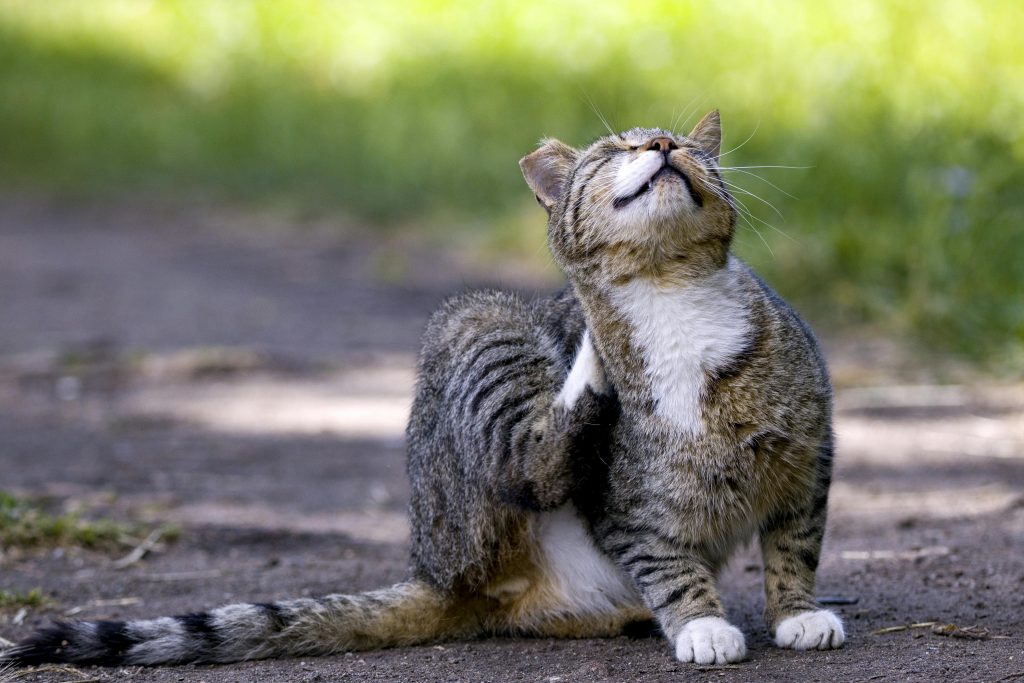
When I first adopted Mango, I had a beautiful fabric sofa that I was very proud of. Within three weeks, the corner closest to the window looked like it had been through a paper shredder.
Mango had scratched it every single day — methodically, enthusiastically, and apparently with great satisfaction.
I made the classic new cat owner mistake of trying to stop the scratching entirely. I sprayed the sofa with a deterrent. I said “no” firmly every time I caught her. I moved her away from the sofa repeatedly.
None of it worked. Mango just found a new corner to scratch.
It was only when I understood why cats scratch — and what they actually need — that I found a solution that worked for both of us. The sofa still has some battle scars. But Mango now has three scratching posts she uses enthusiastically, and the destruction of new furniture has stopped completely.
If your cat is scratching your furniture, carpets, or walls and you want to understand why and what to do about it, this guide will give you the complete picture.
Why Do Cats Scratch? The Real Reasons
Before you can solve the scratching problem, you need to understand that scratching is not misbehavior. It is not spite. It is not your cat trying to destroy your belongings or make your life difficult.
Scratching is a deeply ingrained biological drive with several important functions. A cat that does not scratch is a cat whose fundamental needs are not being met.
Reason 1 — Nail Maintenance
Cats scratch to remove the dead outer sheath from their claws. Unlike human nails, which grow from the base, cat claws grow in layers. The outer layer eventually becomes dull and loose. Scratching against a rough surface strips away the old layer and reveals the sharp, fresh claw underneath.
This process is essential for maintaining functional claws. Without scratching, old claw sheaths accumulate, making the claws thick, dull, and uncomfortable.
If you have ever found a small, hollow, translucent crescent-shaped piece near a scratching post, that is a shed claw sheath. It is a completely normal and healthy sign that the scratching post is doing its job.
Reason 2 — Stretching and Exercise
Scratching is a full-body stretch. When a cat scratches a vertical surface, they extend their spine fully from nose to tail, stretching the muscles of the back, shoulders, and forelimbs in a way that few other activities achieve.
Watch your cat scratch a tall post next time — you will see the whole body lengthen and the muscles engage from front to back. This stretch is an important part of keeping the musculoskeletal system healthy and flexible.
Cats scratch most reliably after waking up — because the scratch-stretch serves as a wake-up exercise that mobilizes stiff muscles. If your cat has a favorite scratching spot near their sleeping area, this is why.
Reason 3 — Scent Marking
Cats have scent glands located between the paw pads. When a cat scratches a surface, these glands deposit pheromones — chemical signals — onto the scratched area. This scent marking communicates the cat’s presence and territorial claim to other cats.
This is why cats scratch prominent locations in the home — corners of furniture, doorframes, and visible high-traffic areas. The scratch mark itself, combined with the scent deposit, creates a visible and olfactory territorial signal.
Even in a single-cat household with no other cats to communicate with, this territorial marking instinct remains active. It is hardwired into the cat’s behavior regardless of whether there is a practical need for it.
Reason 4 — Emotional Expression
Cats scratch when they are excited, happy, or aroused. Many cats rush to scratch after playing, after a meal, after waking from sleep, or when their owner comes home. The scratching is an outlet for positive emotional energy — a physical expression of enthusiasm.
Cats also scratch when stressed or anxious. Scratching releases tension and may have a self-soothing function. If a cat is scratching more than usual — especially in unusual locations — stress or anxiety may be a contributing factor.
Reason 5 — Visual Marking
The scratch marks themselves — the visible shredded fibers or gouged wood — serve as a visual signal to other cats. The height and location of scratch marks communicate information about the size and confidence of the cat that made them.
Indoor cats still exhibit this visual marking behavior even without other cats present. A cat that scratches at a prominent, visible location near the entrance of a room is instinctively marking the territory — regardless of whether any other cat will ever see it.
Why Is Your Cat Scratching Furniture Specifically?
Understanding why cats scratch in general explains the behavior. Understanding why your cat scratches your sofa specifically explains the target.
Location — furniture is typically located in the most prominent, high-traffic areas of the home — exactly where a cat wants to place territorial markers. The corner of a sofa in the living room is prime real estate from a territorial marking perspective.
Texture — many upholstered fabrics have a texture that feels satisfying to scratch — they shred in a way that provides good resistance and allows the claw sheath removal process to work effectively.
Stability — a large, heavy sofa does not move when the cat pushes against it, providing the resistance needed for an effective stretch-scratch.
Scent — furniture absorbs the owner’s scent heavily. Cats that are bonded to their owners often scratch items that carry the owner’s scent — a behavior thought to be a form of scent mixing that reinforces the bond.
Habit — once a cat establishes a scratching spot, the presence of their own scent markings on that spot actively draws them back to scratch there again and again.
What Does Not Work — and Why
Before covering what does work, it is worth understanding the common approaches that fail — so you do not waste time on them.
Scolding or punishment does not work because it does not address the underlying drive. The cat has a biological need to scratch. Scolding teaches the cat to scratch when you are not present — not to stop scratching. It also damages your relationship with the cat by creating an association between your presence and negative experiences.
Declawing does not work as a behavioral solution and causes serious harm. Declawing involves amputating the last bone of each toe. It causes chronic pain, changes the way the cat walks, removes the primary defense mechanism, and is associated with increased biting behavior and litter box avoidance. It is banned in many countries and opposed by virtually all major veterinary organizations. It should never be considered as a solution to scratching.
Deterrent sprays alone do not work long-term without providing an alternative. If you spray the sofa but provide no acceptable scratching surface nearby, the cat will simply find another piece of furniture to scratch.
Covering the sofa temporarily while not providing an alternative does not work for the same reason.
What Actually Works — A Complete Solution
The solution to destructive scratching is not stopping scratching. It is redirecting scratching to acceptable surfaces. This works reliably when done correctly.
Step 1 — Choose the Right Scratching Posts
The single most common reason cats ignore scratching posts is that the posts are unsuitable. Most commercially sold scratching posts are too short, too unstable, or made of the wrong material.
Height — a scratching post must be tall enough for the cat to fully extend their body while scratching. For most adult cats, this means at least sixty to seventy centimeters tall. Many cheap scratching posts are only forty centimeters — far too short for a full stretch. If the post does not allow a full stretch, the cat will not use it consistently.
Stability — the post must be completely stable and not wobble or tip when the cat applies full body weight. An unstable post frightens cats, and they abandon it quickly. Choose a post with a heavy, wide base or one that mounts to the wall.
Material — different cats prefer different textures. The most universally preferred materials are sisal rope and sisal fabric. These have a texture that allows effective claw sheath removal and feels satisfying under the paws. Carpet-covered posts are less ideal — the looped pile catches claws rather than allowing a clean shredding action, and the texture is similar to carpeted floors, which can confuse the cat about what is acceptable to scratch.
Orientation — most cats prefer vertical scratching surfaces. Some prefer horizontal surfaces. Observe your cat — if they scratch the carpet or flat surfaces as well as vertical ones, provide both options.
Step 2 — Place Posts in the Right Locations
Location is just as important as the post itself. A scratching post hidden in a spare bedroom will not be used consistently, regardless of its quality.
Place scratching posts:
- Next to the furniture currently being scratched — this is the most important placement. The cat is already motivated to scratch in that location. Providing an acceptable alternative right there redirects the behavior effectively.
- Near sleeping areas — cats scratch reliably after waking. A post beside the cat’s bed or favorite sleeping spot captures this natural scratching opportunity.
- In prominent, visible locations — remember that cats scratch to mark territory visually. Posts placed in prominent, high-traffic areas satisfy this need.
- Near the entrance to rooms — doorways and room entrances are natural territorial marking points for cats.
The general rule is to put scratching posts where the cat already wants to scratch — not where it would be convenient for you.
Step 3 — Make the Post Appealing
Introduce the new scratching post actively rather than simply placing it and hoping.
Catnip — rub dried catnip into the surface of the post or sprinkle it at the base. Approximately sixty to seventy percent of cats respond to catnip and will investigate and interact with the post enthusiastically.
Play near the post — use a wand toy near the post so the cat’s paws make contact with the post surface during play. This creates a positive first experience with the texture.
Praise and reward — any time you see the cat using the scratching post, offer immediate, enthusiastic praise and a small treat. Positive reinforcement accelerates the adoption of new scratching locations.
Scratch it yourself — this sounds absurd, but it works. Run your fingernails down the post surface. The sound and visual signal of scratching often prompts cats to investigate and scratch the same spot.
Step 4 — Make the Furniture Less Appealing
While introducing acceptable scratching alternatives, temporarily make the furniture less satisfying to scratch.
Double-sided tape — Apply double-sided tape to the areas being scratched. Cats strongly dislike the sticky sensation on their paws and avoid surfaces covered with tape. Remove the tape gradually as the cat adopts the new scratching posts.
Furniture protectors — clear plastic corner protectors are available specifically for this purpose. They cover the corners of sofas and chairs without altering the appearance significantly.
Aluminum foil — covering scratched areas with foil temporarily deters most cats because of the texture and sound.
Commercial deterrent spray — sprays containing citrus or other scents that cats dislike can reduce scratching in specific locations. They must be reapplied regularly and work best in combination with providing appealing alternatives.
The key principle is to make the furniture less appealing at the same time as making the scratching post more appealing. Deterrence alone fails. Deterrence combined with an excellent alternative succeeds.
Step 5 — Never Punish the Cat for Scratching
Punishing scratching damages your relationship with the cat and does not reduce the scratching drive. Instead, calmly redirect the cat to the scratching post every time you see them approaching the furniture.
Do not pick the cat up and physically place them at the post — this can create a negative association with the post. Instead, attract their attention to the post with a toy or a treat and let them approach it willingly.
Step 6 — Trim the Nails Regularly
Regular nail trimming every two to three weeks reduces the damage done when scratching occurs on inappropriate surfaces. It does not stop scratching, but means the consequences of any redirected scratching are less severe.
Step 7 — Consider Nail Caps
Soft nail caps — small rubber caps glued over the trimmed nail — prevent damage from scratching without affecting the cat’s ability to scratch. They last four to six weeks before falling off naturally as the nail grows.
Nail caps are a good option while the redirection training is in progress. They must be applied correctly to be safe — your vet or groomer can apply them initially and show you how to do it at home.
How Many Scratching Posts Does a Cat Need?
More than most owners provide. A general guideline:
- At least one tall vertical sisal post in the main living area
- One horizontal scratcher in or near the sleeping area
- One additional post near any other area where the cat currently scratches
For a single cat in a typical apartment, three scratching surfaces in different locations is a realistic minimum. For multiple cats, provide more — at least one per cat plus one extra, distributed across different areas of the home.
When Scratching Increases Suddenly
If a cat that previously scratched normally and acceptably begins scratching much more than usual — particularly in new locations, near doorways, or on vertical surfaces throughout the home — stress is a likely contributor.
Common stress triggers that increase scratching include:
- A new pet or person in the household
- Moving to a new home
- Changes in routine or the owner’s schedule
- A stray cat visible through windows that is perceived as a territorial threat
- Construction or renovation creating unfamiliar noise and disruption
Address the underlying stress while ensuring adequate scratching resources are available throughout the home.
Protecting Specific Items
Carpets — horizontal scratchers placed over or near the scratched carpet area redirect the behavior effectively. Double-sided carpet tape along the edges of scratched carpet areas deters further damage.
Wallpaper and walls — cats that scratch walls are usually seeking a vertical surface near a location they want to mark. A wall-mounted scratching panel in the same location provides an acceptable alternative without taking up floor space.
Wooden furniture legs — sisal rope wrapped around furniture legs creates an acceptable scratching surface on the item itself. It looks intentional and decorative and redirects the scratching without removing it from the location the cat prefers.
Door frames — a tall scratching post placed directly beside the scratched doorframe addresses the territorial marking motivation effectively.
Final Thoughts
Your cat is not scratching your furniture to frustrate you. They are doing what their biology compels them to do — maintaining their claws, stretching their muscles, marking their territory, and expressing their emotional state.
Fighting against this drive is futile. Working with it — by providing what your cat actually needs in locations they find appropriate — solves the problem reliably and permanently.
Buy the right scratching posts. Put them in the right places. Make them appealing. Be patient during the transition.
Your furniture and your cat can coexist. You just need to speak cat.
⚠️ Disclaimer: This article is for informational purposes only. For cats with sudden behavioral changes or excessive scratching that may indicate stress or anxiety, consult a licensed veterinarian or certified feline behaviorist.
Sources: American Association of Feline Practitioners (AAFP), Cornell Feline Health Center, International Cat Care, PetMD

Stay Updated with Pet Health Tips
Get simple, expert-backed tips, disease alerts, and care guides for your pets—delivered straight to your inbox.